
Table of Contents
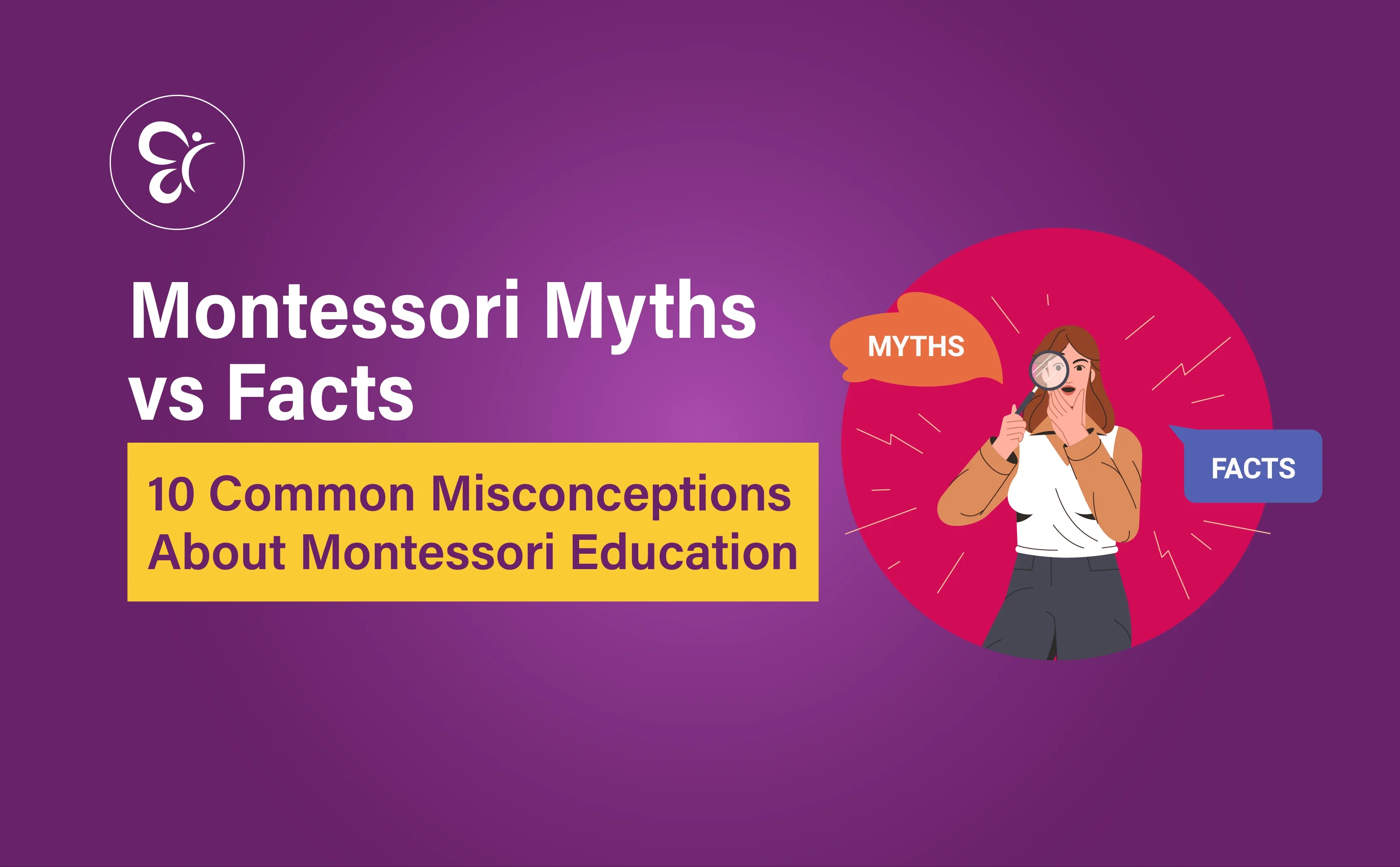
Montessori education is a popular child-centred approach that promotes independence, hands-on learning, practical life skills and a prepared learning environment. However, several Montessori myths and misconceptions can confuse parents about this teaching method. From classroom structure and discipline to Montessori toys, teachers, technology and academic learning, many beliefs do not reflect the real Montessori philosophy. Let's look at some of the most common Montessori myths and facts.
What Is Montessori Education?
Montessori education is an educational approach developed by Italian physician and educator Maria Montessori. It is based on the idea that children learn effectively through active participation, exploration and meaningful experiences.
A typical Montessori classroom includes carefully designed learning materials and activities that encourage children to develop independence, concentration, coordination, problem-solving skills and practical abilities.
Rather than relying only on traditional teacher-led instruction, the Montessori method gives children opportunities to work with materials, make choices within limits and progress according to their individual development.
However, Montessori education is not simply about allowing children to choose activities. It is a structured educational philosophy with specific principles, materials and teaching practices.
10 Montessori Myths vs Facts
Montessori education is often misunderstood because of common myths about freedom, discipline, academics, teachers and classroom learning. Understanding these Montessori myths and facts helps parents and aspiring teachers see how the Montessori method works. Here are 10 common misconceptions explained through simple, accurate and practical facts.
1. Myth: Montessori Children Can Do Whatever They Want
Fact: Montessori Provides Freedom Within Limits
One of the most common Montessori myths is that children have unlimited freedom. Montessori education does encourage children to make choices, but this freedom exists within a structured environment. Children select activities from the materials available to them and are expected to use those materials appropriately and respect the learning environment.
The concept of freedom within limits is important in Montessori teaching. Children gradually learn to make responsible decisions rather than simply following instructions from adults.
For a Montessori teacher, this means providing choices while also establishing clear expectations for behaviour, safety and respect.
2. Myth: Montessori Classrooms Have No Structure or Discipline
Fact: Montessori Classrooms Are Carefully Organised
The idea that Montessori classrooms have no discipline is another widespread misconception.
A Montessori classroom is usually highly organised. Materials have specific places, routines are established and children learn how to use and care for the classroom environment.
Montessori education places considerable emphasis on developing self-discipline. Instead of depending entirely on external punishment or constant adult control, children are gradually encouraged to understand responsibility and manage their behaviour.
This does not mean that Montessori teachers ignore inappropriate behaviour. Teachers observe children, establish boundaries and guide them towards respectful behaviour.
Therefore, Montessori discipline is better understood as an approach that aims to develop independence, responsibility and self-control.
3. Myth: Montessori Education Does Not Focus on Academic Learning
Fact: Montessori Includes Core Academic Areas
Another common Montessori education myth is that children spend their time only on practical activities. In reality, Montessori programmes include important academic areas such as language, reading, writing, mathematics, sensorial learning, science and cultural studies, depending on the age group.
Montessori materials often allow children to experience concepts physically before moving towards more abstract understanding. For example, mathematical materials can help children develop an understanding of quantity, number and operations through hands-on experiences.
Research on Montessori education has reported positive outcomes across academic and non-academic areas, although results can vary according to programme quality, implementation and study design.
For aspiring Montessori teachers, it is therefore important to understand that Montessori education combines academic development with practical and social learning.
4. Myth: Montessori Teachers Do Not Really Teach
Fact: Montessori Teachers Have an Active and Skilled Role
This is one of the most important Montessori teaching myths for future educators to understand.
A Montessori teacher may not spend the entire school day delivering traditional whole-class lectures. However, the teacher plays an essential role in the classroom. Montessori teachers observe children, prepare the learning environment, introduce materials, demonstrate activities and provide individual or small-group lessons.
Observation is particularly important because it helps the teacher understand a child's interests, development and readiness for new challenges.
This is why Montessori teacher training involves more than learning the names of Montessori materials. A teacher needs to understand child development, classroom organisation, lesson presentation and observation. For anyone considering Montessori teacher training in Kerala, these areas should be important factors when evaluating a programme.
5. Myth: Montessori Education Limits Creativity
Fact: Montessori Can Support Exploration and Creative Thinking
Some people believe that Montessori materials are so structured that children have little opportunity to be creative. This view overlooks the broader Montessori environment.
Children are encouraged to explore, repeat activities, solve problems and make choices. The classroom provides opportunities for children to develop concentration, curiosity and independence. Montessori education also includes areas such as art, culture, nature and language, depending on the age and programme.
The Montessori approach does not necessarily treat creativity as unrestricted activity. Instead, children can develop creativity alongside observation, problem-solving and an understanding of the world around them.
For Montessori teachers, the goal is to create an environment where children can investigate ideas while developing the skills needed for purposeful learning.

6. Myth: Montessori Does Not Prepare Children for Real Life
Fact: Practical Life Is an Important Part of Montessori Learning
Practical life activities are a distinctive feature of Montessori education. They can include activities related to personal care, movement, cleaning, arranging, pouring, transferring and caring for the environment. These activities may appear simple, but they can help children develop coordination, concentration, independence and responsibility.
Montessori education views everyday experiences as meaningful opportunities for development. Children are gradually encouraged to take greater responsibility for themselves and their environment.
This approach can also support decision-making and independence, which are useful skills beyond the classroom.
For aspiring Montessori teachers, understanding the purpose behind practical life activities is important. They are not simply classroom chores; they form part of a broader educational approach to independence and development.
7. Myth: Montessori Is Only for Preschool Children
Fact: Montessori Education Can Continue Across Different Age Groups
Montessori is often associated with preschool because early childhood Montessori programmes are widely known. However, Montessori education is not limited to preschool.
Montessori programmes can be designed for different developmental stages, including infancy, early childhood, elementary years and adolescence.
The classroom environment, materials and teaching approach change as children grow. A Montessori programme for older students will naturally look different from one designed for younger children.
This is an important fact for students researching Montessori teacher training in Kerala. Prospective teachers should understand the age group covered by their chosen training programme and the corresponding teaching practices.
8. Myth: Montessori Is Only for Gifted Children
Fact: Montessori Is Not Exclusively Designed for Gifted Learners
Another misconception is that Montessori education is intended only for gifted children or children with particular learning needs.
Montessori education is not defined as an educational system exclusively for one ability group. Its emphasis on observation, individual progression and hands-on learning can accommodate differences between learners.
However, teachers should not assume that every Montessori classroom automatically meets every child's needs. Children have different developmental profiles, and schools may differ in resources, teacher preparation and implementation.
A trained Montessori teacher therefore needs to observe individual children and provide appropriate guidance rather than expecting every learner to progress in exactly the same way.
9. Myth: Montessori Ignores Social Development
Fact: Mixed-Age Classrooms Can Encourage Social Learning
Because Montessori children may spend considerable time working independently, some people assume that the method does not support social development.
Montessori classrooms commonly use mixed-age groups, allowing children at different developmental stages to learn within the same environment.
Older children may have opportunities to help younger classmates, while younger children can learn through observation and interaction with older peers.
Children can also develop social skills through conversations, collaborative activities, classroom routines and shared responsibility.
Montessori education does not require children to work in groups constantly. Instead, it aims to balance independent concentration with meaningful interaction and community participation.
10. Myth: Montessori Education Is Religious
Fact: The Montessori Method Itself Is Not Limited to One Religion
Another common Montessori misconception is that Montessori education is inherently religious. The Montessori educational method itself is not restricted to a particular religion. However, individual schools may have their own religious or institutional affiliations.
Therefore, aspiring Montessori teachers should distinguish between the Montessori philosophy and the identity of a particular school.
When applying for Montessori teacher training or teaching positions, candidates should review the institution's curriculum, educational philosophy and professional expectations rather than making assumptions based on the Montessori name alone.
Why Montessori Myths Matter for Aspiring Teachers?
Understanding Montessori education facts is important for anyone planning a career in early childhood education. A Montessori teacher needs more than familiarity with classroom materials. Professional preparation can involve understanding:
- Montessori philosophy and principles
- Child development
- Prepared environments
- Observation techniques
- Practical life activities
- Language and literacy
- Mathematics
- Montessori materials
- Classroom management
- Mixed-age learning
- Lesson presentations
- Independence and responsibility
- Communication with parents
This makes Montessori teacher training an important consideration for aspiring educators.
Refer the following links to get more details about the Montessori TTC Course.
- Preschool Teacher Salary in Kerala
- Best Montesori Teacher Training Institute
- Online Montessori TTC Courses
- Montessori TTC Fees in Kerala 2026
Start Your Montessori Teaching Journey with CC Learning App
Planning to build a career in Montessori education in Kerala? Choosing the right Montessori TTC course can give you the knowledge and practical foundation needed to work with young learners. The CC Learning App Montessori TTC Course covers key areas such as Montessori philosophy, child development, classroom practices, Montessori materials and teaching methods.
If you are looking for a structured Montessori teacher training course in Kerala, join CC Learning App, multi learning app, and take the next step towards your teaching career. Enrol in the Montessori TTC Course today and start building the skills to become a confident Montessori teacher.
Download CC Learning App Now & Join now the best Montessori TTC
Tap Here
Frequently Asked Questions
1. Is Montessori education academically focused?
Yes. Montessori programmes can include language, reading, writing, mathematics, science and cultural learning alongside practical and sensorial activities.
2. Do Montessori teachers teach children?
Yes. Montessori teachers observe learners, prepare the environment, introduce materials and provide individual or small-group presentations.
3. Is Montessori education only suitable for preschool children?
No. Montessori programmes can extend across several developmental stages, although the classroom environment and teaching methods change with age.
4. What is the biggest Montessori misconception?
A major misconception is that Montessori means unlimited freedom. In practice, children make choices within a prepared environment with clear expectations and responsibilities.
5. Is Montessori teacher training useful for aspiring educators?
Professional Montessori training can help aspiring teachers understand the philosophy, materials, observation techniques and classroom practices associated with Montessori education.
Notifications
Trending Updates



Related Blogs
January 29, 2026
AMI Montessori vs IMC Montessori
4 minute read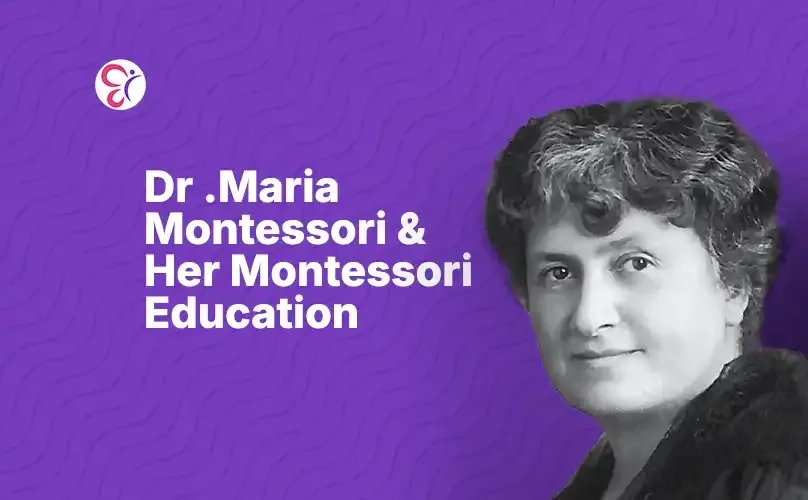
February 2, 2026
Dr Maria Montessori & Her Montessori Education
6 minute read
December 16, 2025
Montessori TTC Course 2026 : Certificate Details, Career Scope & Eligibility
4 minute read
January 29, 2026