
Table of Contents
The Kerala Teacher Eligibility Test (KTET) Category 4 exam is becoming highly competitive as the number of applicants for Kerala language teacher posts continues to rise every year. Candidates preparing for KTET Category 4 should thoroughly understand the latest KTET Category 4 syllabus 2026, exam pattern, language pedagogy topics, subject-wise syllabus, marking scheme, and section-wise weightage before starting their preparation. A clear understanding of the KTET Category 4 exam structure helps aspirants improve accuracy, score higher marks, and secure eligibility for language teacher recruitment in Kerala schools.
What is KTET Category 4 Exam?
KTET Category 4 is conducted by Kerala Pareeksha Bhavan for candidates aspiring to become Language Teachers, Specialist Teachers, and Physical Education Teachers in Kerala schools. The KTET category 4 exam is mandatory for candidates seeking teaching jobs in government and aided schools across Kerala.
KTET Category 4 Includes:
- Language Teachers (Arabic, Hindi, Sanskrit, Urdu)
- Specialist Teachers
- Physical Education Teachers
- Art & Craft Teachers
- Music Teachers
Candidates applying for KTET category 4 must satisfy the qualification requirements prescribed under the Kerala Education Rules (KER). Those with approved teaching certificates, diplomas, or degrees recognised by universities, NCTE, board of examinations, or the government of Kerala are also eligible to apply.
Join Today For The Best KTET Online Coaching
Tap Here
KTET Category 4 Syllabus
The KTET Category 4 syllabus mainly covers child development & pedagogy, Teaching Aptitude, Language Skills, and subject-specific topics. Important subjects included in the KTET Category 4 exam are Malayalam, English, Hindi, Arabic, Sanskrit, Urdu, Tamil, Physical Education, Sewing and Music Education. Candidates should also focus on classroom management, educational psychology, and language pedagogy to score high marks in the KTET Category 4 examination. Scroll down to see the KTET 4 syllabus in detail.
1. ARABIC
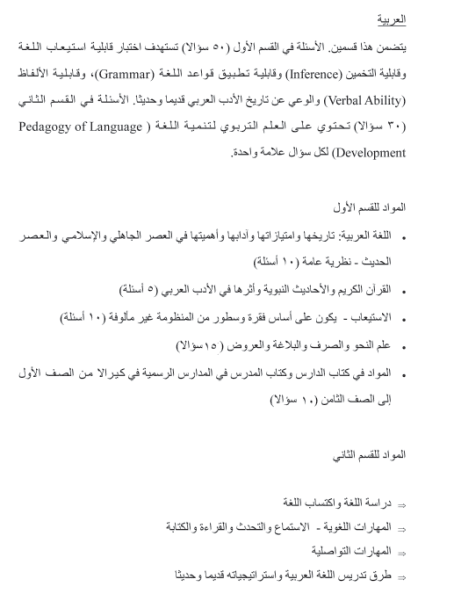
This section has two parts. First part (50 MCQs) intents to text comprehension, Inference , Verbal ability, Applied grammar and Understanding of history of classical and modern Arabic literature. The second part (30 MCQs) tests the awareness of pedagogy of language learning and development. Each MCQ carries one mark.
Part One
- Arabic language¡V its history, characteristics, literature and its importance - Classical and Modern: General overview (10 Marks)
- Influence of Holly Quran and Hadith Shareef in Arabic literature. (5 Marks)
- Comprehension based on one unseen passage and poem lines (10 Marks)
- Applied Grammar, Rhetoric and Prosody (15 Marks)
- Arabic Text books and Hand books from STD 1 to STD 8 of state schools of Kerala (10 Marks)
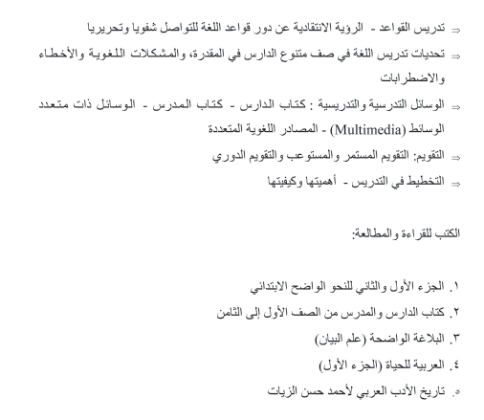
Part Two
- Language learning and acquisition
- Basic language skills - listening, speaking, reading and writing
- Communication skills
- Methods of Teaching Arabic - Traditional and modern
- Teaching of grammar - modern view on the role of grammar
- Teaching languages in diverse class rooms, differently abled children: Problems and Challenges
- Teaching, learning materials, text books, hand books, and Multimedia
- Evaluation: CCE, Terminal Evaluation
- Lesson planning - its important and modalities
2. Hindi
हिंदी पाठ्यक्रम
भाषा का शिक्षणशास्त्र (Pedagogy of Language development)
- भाषार्जन प्रक्रिया - भाषा का नया परिप्रेक्ष्य - सैद्धांतिक आधार। - सर्वभाषा व्याकरण (Universal Grammar) - सामाजिक ज्ञान निर्मितिवाद (Social Constructivism) - बहुमुखी बुद्धि सिद्धांत (Theory of Multiple Inteligence) (3)
- प्रोक्तिपरक शिक्षण शास्त्र - कथानक का महत्व। (2)
- आख्यान एक शैक्षणिक उपकरण के रूप में - समेकित दक्षता - अर्थग्रहण कैसे सुनिश्चित करें? (2)
- संशोधन प्रक्रिया - स्वनिर्धारण (5)
- अन्य भाषा की कक्षा में मातृभाषा की भूमिका। (1)
- वाचन, लेखा - चित्रीय वाचन और लेखन, जैविक वाचन, जैविक लेखन। (3)
- अध्येता और पाठ्य - सामग्री गतिविधि का संबंध - भाषार्जन और भाषा के बारे में अध्ययन - शैक्षणिक उपकरण - विश्लेषणात्मक प्रश्न। (2)
- आंकन और मूल्यांकन। (2)
- भाषा शिक्षण की चुनौतियाँ। (1)
- कक्षा वातावरण (1)
- शिक्षण सामग्रियाँ - तकनीकी का उपयोग। (2)
- भाषाई कौशल - श्रवण, भाषण, वाचन, लेखन - आशयग्रहण - सृजनात्मकता। (5)
- विशेष मदद चाहनेवाले छात्रों (Children with special needs) को अध्ययन - संयोजित अध्ययन (Inclusive Education) (1)
विषय (CONTENT)
हिंदी भाषा और लिपि
- हिंदी की प्रमुख बोलियाँ- ब्रज, अवधी, खड़ीबोली (2)
- देवनागरी लिपि (2)
हिंदी साहित्य का इतिहास
- वीरगाथा काल - चंदबरदाई-पृथ्वीराज रासो (1)
- भक्तिकाल - निर्गुण काव्यधारा- कबीरदास (1)
- सगुण काव्यधारा-सूरदास और तुलसीदास की प्रमुख रचनाएँ (2)
- रीतिकाल- बिहारीलाल (1)
- द्विवेदी युग-अयोध्यासिंह उपाध्याय हरिऔध -प्रिय प्रवास
मैथिली शरण गुप्त - पंचवटी (3) - छायावाद (5) जयशंकर प्रसाद - आँसू सुमित्रानंदन पंत - प्रथम रश्मि सूर्यकांत त्रिपाठी निराला - जुही की कली महादेवी वर्मा - मेरे दीपक
- प्रगतिवाद - नागार्जुन-कालिदास (2)
- प्रयोगवाद - अज्ञेय -नदी के द्वीप (2)
- समकालीन कविता (2) कुमार अंबुज- एक आदमी जंगल में
- नाटक : जयशंकर प्रसाद- स्कंदगुप्त (2) मोहन राकेश- आषाढ़ का एक दिन (2)
- उपन्यास : प्रेमचंद - निर्मला (2) मन्नु भंडारी - आपका बंटी (2)
- कहानी : प्रेमचंद-पूस की रात (1) यशपाल- दुःख (1) उषा प्रियंवदा- वापसी (1)
- रेखाचित्र : - महादेवी वर्मा - गिल्लु (2)
- आत्मकथा : हरिवंशराय बच्चन की आत्मकथा (1)
प्रयोजनमूलक हिंदी
- राष्ट्रभाषा और राजभाषा (3)
- पारिभाषिक शब्दावली (2)
व्याकरण
- वर्ण-विचार (1)
- संज्ञा (2)
- सर्वनाम (2)
- विशेषण (2)
- क्रिया (4)
- कारक (2)
- उपसर्ग, प्रत्यय (1)
- वाच्य (2)
मुहावरे एवं लोकोक्तियाँ
- मुहावरा (1)
- लोकोक्ति (1)
Reference: Hindi Text Books and hand books : std. V to XII
3. SANSKRIT
A. शिक्षाशास्त्रावगमः। बहुविकल्पमातृकाप्रश्नाः (30)
- भाषावगमः।
का नाम भाषा। भाषागोत्राणि। भाषासु संस्कृतस्य स्थानम्। श्रवण - भाषण - वाचन लेखन - नैपुण्यः। भाषाधर्माः - ग्रहणम् - प्रकटनम् - आस्वादनम्। संस्कृतपठनस्योद्देश्यानि। - भाषाबोधनतत्त्वानि।
बोधनविधिसूत्राणि (Maxims of Language Teaching) - संस्कृत शिक्षणविधयः (Methods of teaching Sanskrit)
गुरुकुल - भण्डार्कर् - पाठ्यपुस्तक - समन्वय पद्धतयः। गद्यशिक्षणम्। पद्यशिक्षणम्। व्याकरणशिक्षणम्। नाटकशिक्षणम्। रचनाशिक्षणम्। - भाषापठनसमुपगमः। (Approaches of Language learning)
व्यवहारवादः। ज्ञाननिर्मितिवादः। समस्याधिष्ठित पठनम्। विमर्शात्मक पठनम्। बहुमुखबुद्धिसिद्धान्तः। - ङ्कलित शिक्षा।
- मूल्यनिर्णयः।
साम्प्रदायिकमूल्यनिर्णयः। निरन्तरमूल्यनिर्णयः। स्वयम्मूल्यनिर्णयः। परस्परमूल्यनिर्णयः। वार्षिकमूल्यनिर्णयः। श्रेणीकरणम् (Grading)
Ref:
- संस्कृताध्यापनस्य नूतनप्रविधयः by CHLN SARMA & Fatheh Singh
- संस्कृताध्यापनम् by Dr. Sahadeven
B. विषयः। (Content) बहुविकल्पमातृकाप्रश्नाः (60)
- अदृष्टं गद्यभागं/नाटकं पठित्वा तद्गत - प्रश्नानामुत्तराणामङ्कनम्। बहुविकल्पमातृकाप्रश्नाः (5)
- अदृष्टं श्लोकं/सुभाषितं पठित्वा तद्गत - प्रश्नानामुत्तराणामङ्कनम्। बहुविकल्पमातृकाप्रश्नाः (5)
- संस्कृतशास्त्रं संस्कृत साहित्यम् च (15) केरलीय संस्कृतकृतयः (3) आनुकालिकविषयाः (2)
आहत्य 20 बहुविकल्पमातृका प्रश्नाः (20)
व्याकरणम्
- धातुपदलकारपुरुषवचनानि (2)
- अन्तलिङ्गविभक्तिवचनानि (2)
- सन्धिः (5)
- कारकम् (5)
- समासः (2)
- प्रयोगः (2)
- संज्ञाप्रकरणम् (2)
आहत्य 20 बहुविकल्पमातृकाप्रश्नाः (20)
अलङ्काराः
अनुप्रासः, यमकम्, श्लेषः, काव्यलिङ्गम्, उपमा, रूपकम्, उत्प्रेक्षा, दीपकम्, अर्थान्तरन्यासः, उल्लेखः।
आहत्य 5 बहुविकल्पमातृकाप्रश्नाः (5)
वृत्तम्
वर्णानां गुरुलघुविवेचनं गणनिर्णयञ्च। अनुष्टुप्, इन्द्रवज्रा, रथोद्धता पुष्पिताग्रा, उपजातिः, वंशस्थम् स्रग्धरा, मालिनी, वसन्ततिलका, शार्दूलविक्रीडितम्। आहत्य 5 बहुविकल्पमातृकाप्रश्नाः। (5)
Ref:
- SCERT द्वारा निर्दिष्टानि पञ्चमीतः द्वादशकक्षापर्यन्तानि पाठपुस्तकानि हस्तपुस्तकानि च। (संस्कृतविद्यालयानां अक्कादमिक विद्यालयानां च)
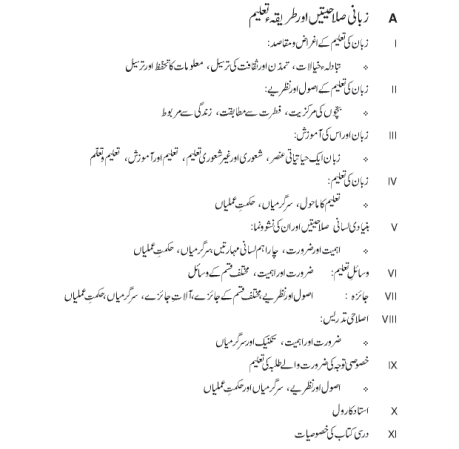
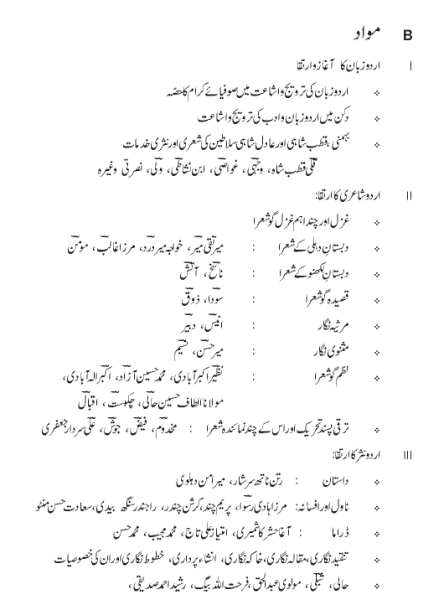
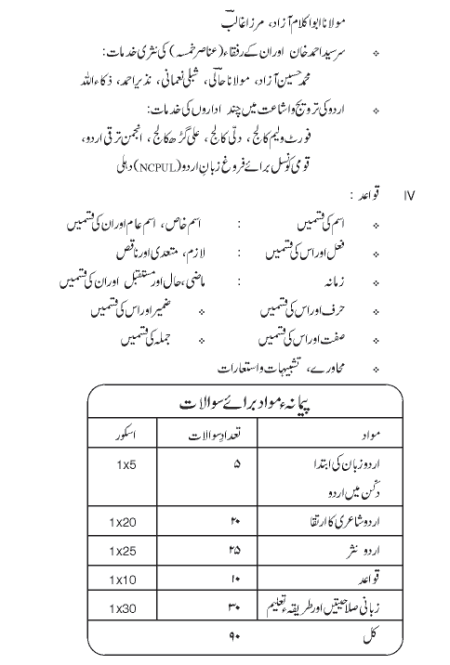
4. URDU
5. PHYSICAL EDUCATION
1. Foundation, Philosophy and History of Physical Education
a) Introduction & Sports Sciences
- Concepts: Definition, aims, objectives, scope, and nature of Physical Education.
- Modern Concepts: Inter-disciplinary approach in Physical Education.
- Sports Sciences: Sports Medicine, Biomechanics, Kinesiology, Exercise Physiology, and Sports Psychology.
b) Biological Principles
- Biological basis of life, growth, and development.
- Biped position, individual differences, heredity, and environment.
- Sex differences and body types.
- Age Classifications: Anatomical age, physiological age, chronological age, and mental age.
c) Philosophical Principles
- Core Philosophies: Meaning and nature of philosophy; Educational philosophy applied to Physical Education-Naturalism, idealism, pragmatism, realism, and existentialism.
- Philosophers: Contributions of Rousseau, Froebel, Dewey, Gandhiji, and Tagore.
d) History & Sports Events
- Historical Eras: Physical Education in ancient Greece and Rome; Ancient India (Vedic period and epic period).
- Organizations & Schemes: SAI, NSNIS, NYK, PYKKA, TPFP.
- Awards: National Sports Awards.
- Global Tournaments: Ancient and modern Olympic Games, Youth Olympic Games (YOG), Asian Games, Commonwealth Games, and SAF games.
2. Management of Physical Education and Sports
- Core Concepts: Meaning, importance, scope, principles, guidelines, and skills of management.
- Structural Bodies: Management structure for Physical Education and Sports programmes (SAI, SGFI, KSSC, IOA).
- Facility & Equipment Management: Playfield preparation, layout, and maintenance; purchase, care, maintenance, and repair of equipment.
- Administration: Planning and budgeting, storekeeping, stock registers, and stock verification.
3. Anatomy, Physiology, Kinesiology and Biomechanics
a) Anatomy
- Cell, tissue, organ, system, and cell divisions.
- Structure and functions of blood.
- Classifications and functions of bones.
- Structural and functional classification of muscles (including cardiac and smooth muscles).
- Definition and classification of joints.
b) Physiology
- Systems & Organs: Digestion, absorption, and transportation of nutrients; organs associated with excretion and their functions; secretions and functions of endocrine glands (Pituitary and thyroid); functions of sense organs (skin, eye, nose, tongue, and ear).
- Nervous System: Structure of a neuron; functions of the brain and spinal cord.
- Cardiovascular & Respiratory Metrics: Cardiac output, stroke volume, heart rate, venous return, blood pressure, vital capacity, tidal volume, $VO_2max$, BMI, and BMR.
- Exercise Impact: Aerobic and anaerobic activities, oxygen debt, and second wind.
c) Kinesiology and Biomechanics
- Fundamentals: Definitions and role in Physical Education and Sports; fundamental and anatomical positions; orientation of planes and axes of motion; fundamental joint movements and related muscles; types of muscular contraction.
- Key Terms & Mechanical Principles:
- Mass, weight, force, pressure, motion (and its types), speed, velocity, acceleration, momentum, impulse, impact, and elasticity.
- Equilibrium, friction, center of gravity, moment of force, moment of inertia, and projectiles.
- Levers and its types, anatomical levers, and Newton's laws of motion.
- Spin, water buoyancy, centrifugal and centripetal force, work, power, energy, air resistance, and water resistance.
4. Psychology and Sociology
a) Psychology
- Definition and nature of Psychology; branches of Psychology (Educational and Sports psychology).
- Methods of Psychology.
- Learning: Definition, types, nature, laws, and transfer of learning.
- Performance Factors: Motivation, personality (and its relation to sports performance), competition anxiety (its causes and ways to overcome it).
b) Sociology
- Nature and scope of sociology.
- Socialization, social stratification, social control, groups, crowds, and the public.
- Societal Values: Values of sports in society, sports and mass media, sports and politics.
- Global Impact: Role of sports in national integration and world peace.
5. Health Education, First-Aid, Corrective and Adapted Physical Education
a) Health Education
- Definitions, determinants, and spectrum of health.
- Diseases: Communicable diseases, disease cycle, methods of disease transmission, immunity and lifestyle diseases (Type II diabetes, hypertension, osteoporosis, obesity, heart diseases).
- Nutrition & Hygiene: Concept of hygiene, community health, classification of foods, proximate principles, sources and functions of vitamins and minerals, balanced diet, under-nutrition, and malnutrition.
b) First-Aid
- Definition and principles of first-aid; ABC of first-aid; CPR and RICE protocols.
- Injury & Emergency Management: Wounds (types and management), common sports injuries, burns, scalds, animal bites, snake bites, heat stroke, drowning, and electric shock.
- Safety Contexts: Safety at home, school, sports, and Physical Education.
c) Corrective Physical Education
- Definition and concept of posture; disadvantages and causes of bad posture.
- Postural Deviations: Kyphosis, lordosis, scoliosis, knock-knees, bow-legs, flat foot (causes and treatment through corrective exercises).
- Therapy & Prevention: Massage and its classifications; principles of injury prevention.
d) Adapted Physical Education
- Definition of disabling conditions; benefits of Physical Education for students with disabilities.
- Designing Physical Education programmes for differently-abled students.
- Opportunities: Recreational sports and competition opportunities (e.g., Paralympics).
- Disability Classifications: Physical disabilities, mental retardation, visual impairment, hearing impairment, and behavioral disorders (including their characteristics and functional limitations).
6. Teaching Methodology in Physical Education
- Educational Basics: Definitions and functions of education; types of education (formal, informal and non-formal); principles of teaching.
- Teaching Methods: Lecture, Command, Demonstration, Imitation, Project, Discussion, Group Directed Practice, Dramatisation, At Will, Set Drill, Whole, Part, Whole-Part-Whole, and Stage-Whole methods.
- Presentation Techniques: Meaning, importance, and steps involved; preparation (personal and technical); commands (types and situational uses); formations (types and situational uses); class management (meaning and principles).
- Training Frameworks: Practice teaching and micro-teaching.
- Educational Technologies: Importance and criteria for selecting teaching aids; Information and Communication Technologies (ICT) in Physical Education.
- Lesson Planning: Meaning, objectives, principles, types, and parts of a lesson plan.
- Competitive Events: Tournaments (types, fixtures, and organization), event management, intramurals (objectives, organization, and annual sports day), and extramurals (objectives).
7. Test & Measurements in Physical Education & Sports
a) Evaluation Fundamentals & Fitness Tests
- Core Terms: Meaning, need, and importance of test, measurement, and evaluation.
- Test Selection Criteria: Scientific authenticity, validity, reliability, objectivity, norms, administrative feasibility, and educational applications.
- Testing Administration: Duties before, during, and after testing.
- Cardio-Respiratory Tests: Cooper's 12-minute Run/Walk test, Harvard's step test (and its modifications).
- Motor Fitness & Ability Tests: AAHPER physical fitness test battery, JCR test, Barrow motor ability test (Men), Scott Motor ability test (Women), and McCloys' general motor ability test.
- Strength Tests: Kraus-Weber minimum muscular fitness test, Roger's physical fitness index.
b) Sports Skill Tests
Sport | Specific Tests |
Basketball | Johnson's basketball test, Knox basketball test |
Football | AAHPER football test, McDonald Soccer test |
Volleyball | Brady volleyball test, AAHPER volleyball test |
Badminton | Lockhart and McPherson's test, French short-serve test |
Tennis | Broer Miller test, Dyer's test |
Hockey | Friedel field hockey test |
Cricket | Frank-Tyson's Cricket skill tests |
c) Anthropometry & Statistics
- Anthropometry: Girth measurements, width measurements, height and weight readings, skinfold measurements, body composition, and indices.
- Statistics: Measures of Central Tendency (Mean, Median, Mode); Measures of Variability (Range, Quartile Deviation, Standard Deviation).
d) Rules and Measurements of Selected Games
- Track & Field, Basketball, Football, Volleyball, Hockey, Cricket, Shuttle Badminton, Table Tennis, Handball, Kho-Kho, Kabaddi, and Swimming.
5. General Theory and Methods of Training
a) Core Training Concepts
- Definitions of conditioning, training, coaching, and sports training; objectives and principles of sports training.
- Training Load: Load adaptation process, supercompensation, overload (signs, symptoms, remedial measures, and overcoming methods).
b) Physical Fitness
- Definition of physical fitness; health-related vs. skill/performance-related physical fitness; components of physical fitness.
c) Training Components & Conditioning Methods
- Strength: Definition, types, determining factors, and training methods.
- Endurance: Definition, classification, determining factors, and training methods (Continuous, Interval, and Repetition methods).
- Speed: Definition, types of speed abilities, determining factors, development methods, and the speed barrier concept.
- Flexibility: Definition, types, determining factors, and training methods.
- Coordinative Abilities: Definition, importance, types, and development methods.
d) Technical & Tactical Training
- Technical Learning: Definition and importance of technique; process of technique learning (phases of skill acquisition); methods of technique training.
- Tactics & Strategy: Basic concepts.
- Planning & Periodisation: Principles of planning; training cycles (micro, meso, and macro cycles); definition, importance, and types of periodisation.
6. DRAWING
Objective: To develop an awareness of the basic principles of art in students so that they can articulate in visual language.
1. Basic Elements of Art
- Core Concepts: Picture plane, picture frame, line, shape, and texture.
- Mediums: Pigments, and various media and materials.
- Theory & Structure: Colour theory, composition, characteristics of space, volume, dimensions, and perspective principles.
- Space Categorization: Geometrical space, perceptual space, and conceptual space.
- Sculptural Expression: Space volume as a medium of experience and expression in sculpture.
2. Principles of Basic Elements
- Proportion, balance, harmony, and rhythm.
- Unity of form and composition.
- Art and its primitive beginnings, including prehistoric cave paintings of Europe and India.
3. History of Indian Art
- Early Civilizations: Indus Valley Civilization (sculptures and monuments).
- Mauryan Art: Buddhist Stupas and pillars, and the evolution of the Buddha image.
- Classical Era: Ajanta paintings, and Gupta architecture and sculpture.
- Medieval & Regional Art: Post-Gupta period, Medieval Hindu Temples (Chola, Pandya, Pallava kingdoms), Kerala Murals, and the Folk and Ritual art of Kerala.
4. History of World Art
- Prehistoric & Ancient Art:
- Paleolithic painting and sculpture (e.g., Altamira).
- Neolithic pottery.
- The magico-religious function of art.
- Greek Art and Roman architecture and sculpture.
- Medieval Era: Early Christian Art, Byzantine art, and Gothic art (Art of the Middle Ages).
- Renaissance to 19th Century:
- Renaissance in Italy and Northern European countries (Leonardo da Vinci, Michelangelo, Raphael).
- Dutch realists of the 17th Century.
- Romanticism and 19th-Century Realism.
- Modern to Contemporary Movements:
- Impressionism, Post-Impressionism, Fauvism, Cubism, Expressionism, Futurism, Abstraction, Surrealism, and Dadaism.
- Pop art, Post-modern art, Installations, Public art practices, and the contemporary art scene.
5. Art Pedagogy
- Curriculum Integration: Scope, role, and nature of art education in the school curriculum.
- Rationale: Incorporating art as a subject to supplement the learning process and positively influence overall personality development.
Methods of Imparting Skills
- Constructive Method: Focusing on practical work, concept formation, and imagination.
- Pedagogical Practices:
- History of Art and Ideas: Narrated engagingly in a story-telling style.
- Aesthetics: A simple introduction to important aesthetic concepts.
- Formal Analysis: Description of great works of art, emphasizing the significance of the form-and-content relationship.
- Interactive Discussions: Arranging reproductions or electronic images of artworks to spark discussions; motivating students to observe works closely and encouraging them to interpret them in their own words.
- Art Appreciation & Criticism: Introducing students to simple descriptive passages written by noted art writers; training them how to talk and write about paintings or sculptures by analyzing their form, content, and meaning.
7. SEWING
1. Sewing Machine
- Types: Hand, treadle, electrical, and overlock sewing machines.
- Mechanics: Parts of the sewing machine and their respective functions.
- Maintenance: Care, routine maintenance, and special machine attachments.
- Troubleshooting: Common problems encountered while sewing and their remedies.
2. Tailoring Tools and Equipments
- Classifications: Essential equipment categorized by function:
- Measuring tools
- Drafting tools
- Cutting tools
- Stitching tools
- Pressing equipment
3. Body Measurement & Anatomy of Design
- Fundamentals: Methodology of measuring the human body and its practical importance.
- Tools & References: Use of dress forms, measurement charts, and the relation of different body measurements.
- Proportion Theories: Eight-head theory and ten-head theory.
4. Pattern Making & Fabric Cutting
- Pattern Development: Precautions in making patterns, layout planning, pattern grading, and specification sheets (spec sheets).
- Fabric Preparation: Precautions in cutting cloth based on fabric texture and design/print orientation.
5. Garment Construction & Engineering
a) Hand Stitches used for Tailoring
- Tacking, running stitch, hemming, backstitch, buttonhole stitch, herringbone stitch, and overcasting.
b) Fullness in Garments
- Seams, darts, tucks, pleats, ruffles, gathers, and smocking.
c) Openings, Plackets & Fasteners
- Plackets & Openings: Hemmed opening, continuous opening, simple placket, mitred opening, fly opening, bound opening, and shirt opening.
- Fasteners: Buttonholes, buttons, hooks, eyes, zippers, tape loops, and rouleau loops.
d) Edge Finishing Techniques
- Facing, binding, and piping.
6. Textile Science: Raw Materials
- Introduction to Textiles: Primary classification of fibers (Natural vs. Man-made).
- Yarn & Threads:
- Yarn manufacturing processes and yarn particulars.
- Different types of sewing threads and their specific properties.
7. Fabric Forming & Manufacturing
- Loom Technology: Features of looms, types of looms, and the mechanical weaving process.
- Fabric Particulars: Warp, weft, EPI (Ends Per Inch), PPI (Picks Per Inch), selvedge, cloth width, and weaving designs.
8. Fabric Finishing, Dyeing & Printing
- Mechanical & Chemical Finishing: Singeing, scouring, bleaching, mercerizing, sanforizing, calendering, shrinking, weighting, napping, glazing, embossing, and moiréing.
- Dyeing: Common dyes, styles, and structural methods of dyeing.
- Printing Techniques: Roller printing, screen printing, block printing, stencil printing, spray printing, direct printing, discharge printing, and resist printing.
9. Study of Cloth, Wardrobe Selection & Care
- Historical Context: History of clothing.
- Fabric Identification: Material study of cotton, silk, linen, wool, chiffon, net, rayon, polyester, nylon, velvet, and canvas.
- Socio-Cultural Selection: Factors governing the selection of fabrics according to climate, age, occupation, religion, culture, political context, and festivals.
- Garment Longevity & Mending:
- Clothing Care: Stain removal techniques and commercial/home laundry practices.
- Repair & Mending: Different types of mending, darning, and patching.
8. PEDAGOGY
1. Foundations of Art & Craft Education
- Curriculum Integration: Scope, role, and nature of art and craft education in the school curriculum.
- Rationale: Core reasoning for including craft subjects in schools to supplement the learning process.
- Psychological Impact: Overall contribution of craft education toward personal development and student personality growth.
2. Methods of Imparting Skills & Instructional Design
- Constructive Methodology: Practical-based work, nurturing imagination, and structural concept formation.
- Instructional Media: Use of specialized teaching aids and modern audio-visual equipment.
- Documentation & Field Work: Preparation of practical records, portfolios/albums, and organized field visits.
- Curriculum Delivery: Structural lesson planning and comprehensive unit planning.
- Learner Management: Techniques for directing learner interest and individual learning approaches.
3. Fashion Dynamics & Industry Trends
- Garment Manufacturing: Current global trends, modern industrial innovations, and overall development in manufacturing.
- Socio-Economic Dimensions: Socio-economic considerations governing fashion and consumer behavior.
- Designers Ecosystem: Study of legendary and contemporary fashion designers in India and abroad.
4. Academic Resources & Regulatory Bodies
- Craft Literature: specialised publications, research books, and academic journals in the field of textiles and crafts.
- Apex Educational Institutes: National-level institutes offering professional garment manufacturing education (e.g., NIFT - National Institute of Fashion Technology).
- Quality Norms & Research Bodies: Institutes involved in framing textile regulations, quality metrics, and standardized norms:
- ATIRA (Ahmedabad Textile Industry's Research Association)
- NITRA (Northern India Textile Research Association)
5. Evaluation & Assessment Framework
- Practical Assessments: Principles of designing and constructing valid practical tests.
- Skill Evaluation: Objective rubrics for measuring technical competence, craftsmanship, and motor skills.
8. MUSIC
1. Historical Aspects of Music
a) Origin and Evolution
- Classifications: Margi and Desi music systems.
- Structural Development: Evolution of scales.
- Sacred Frameworks: Forms in sacred music and their development.
b) Ancient Literature and Treatises
- Vedic Period: Chant pitch systems including Udatha, Anudatha, and Swaritha.
- Core Texts:
- Natya Shastra by Bharatha Muni
- Brihaddesi by Matanga Muni
- Sangeeta Ratnakara by Sarangadeva
- Swaramelakalanidhi by Ramamatya
- Pedagogical Roots: Structured curriculum introduced by Purandara Dasa in Mayamalavagowla Raga.
c) Crucial Historical Shifts
- The Trinity: Pre-and post-period developments around the Golden Age/Musical Trinity.
- Geographical Splitting: The historical bifurcation of Indian classical music into Hindustani and Carnatic music traditions.
- Ashtapadi: Structural impact of Jayadeva's Gita Govinda.
d) Royal Seats and Patronage
- Historical royal centers that preserved and developed classical music: Madurai, Tanjore, Mysore, and Travancore.
e) Life Sketches (Biographies of Eminent Composers)
- The Trinity: Tyagaraja, Muthuswami Dikshitar, and Syama Sastri.
- Early Masters: Purandara Dasa, Kshetrayya, Narayana Teertha, Jayadeva, and Arunagirinathar.
- Kerala Composers & Royal Patrons: Maharaja Swathi Thirunal, Mahakavi Kuttamath, Kuttikunju Thankachi, Irayimman Thambi, and K.C. Kesava Pillai.
- Modern & Classical Legends: Papanasam Sivan and Neelakanta Sivan.
2. Technical Aspects of Music
a) Musical Terminology
- Fundamental structural elements: Nada, Swara, Sruthi, Sthayi, Raga, Gamaka, and Notation.
- Swaras Relations: Vadi, Samvadi, Vivadi, and Anuvadi.
- Raga Characteristics: Graha, Jeeva, Nyasa, and Amsa.
b) Musical Forms (Composition Types)
- Abhyasa Gana (Pedagogical): Geetham, Jathiswaram, Swarajathi, and Tanavarnam.
- Sabhagana (Concert Repertoire): Daruvarnam, Padavarnam, Kriti, Keerthanam, Padam, Ragamalika, Javali, Thillana, and Thiruppugazh.
c) Raga Lakshanam (Study of Specific Ragas)
- Melakarta and Janya Ragas: Mayamalavagowla, Kalyani, Hamsadhwani, Sankarabharanam, Hindolam, Mohanam, Saveri, Thodi, Pantuvarali, Keeravani, Kharaharapriya, Chakravakam, Bilahari, Arabhi, Vasantha, Abhogi, Kambhoji, Bhairavi, Poorvikalyani, and Madhyamavathi.
- Advanced Concepts: Sruthibhedha (modal shift of tonic), the 22 Sruthis, Dasavidha Gamakas (ten types of ornamentations), 72 Melakarta system, Katapayadi formula, and Bhoothasankhya system.
3. Origin and Development of Thala (Rhythm)
- Core Schemes: Saptha Thala (7 basic thalas) and the expanded scheme of 35 thalas.
- Structural Metrics: Jathi, Gathi, Angas, Shadanga, and Thala Dasaprana (ten lifelines of rhythm).
- Specific Thalas: Desadi Thala, Madhyadi Thala, Chappu Thala, and its structural variations.
4. Recent Trends and Developments in Music
- Commercial & Contemporary Genres: Light music, film playback songs, patriotic songs, festival/devotional music, Fusion music, and Karaoke setups.
- Therapeutic Application: Music therapy and its clinical/relaxing applications.
- Cross-Genre Influences:
- Structural influence of Carnatic classical music on Kathakali music (Sopana Sangeetham).
- Aesthetic influence of Hindustani classical music on Carnatic music compositions.
Start Your KTET Category 4 Preparation Today with CC Learning App
Dreaming of becoming a Language Teacher, Physical Education Teacher, Music Teacher or Specialist Teacher in Kerala schools? Join CC Learning App, the best KTET online coaching app, and prepare for the KTET Category 4 exam with expert guidance and structured online coaching.
Get access to live classes, recorded sessions, updated KTET Category 4 study materials, pedagogy-focused preparation, OMR mock tests, previous year question discussions, revision programmes and personal mentor support through an all-in-one learning platform.
Improve your confidence, improve your exam performance and stay confident in the highly competitive KTET 2026 exam with Kerala’s trusted KTET coaching app.
Enrol now in the CC Learning App and begin your KTET Category 4 preparation with smart learning and regular practice.
Download CC Learning App and Start Your KTET Exam Preparation
Tap Here
Frequently Asked Questions
1. What is the KTET Category 4 exam?
The Kerala Teacher Eligibility Test (KTET) Category 4 exam is conducted by Kerala Pareeksha Bhavan for candidates aspiring to become Language Teachers, Specialist Teachers, Physical Education Teachers, Music Teachers, and Art Teachers in Kerala government and aided schools. Qualifying the KTET Category 4 exam is mandatory for teacher recruitment in Kerala.
2. Who can apply for KTET Category 4?
Candidates who satisfy the qualification criteria prescribed under the Kerala Education Rules (KER) can apply for the KTET Category 4 examination. Applicants with recognised diplomas, degrees, language qualifications, physical education certificates, or specialist teaching qualifications approved by NCTE, universities, or the Government of Kerala are eligible.
3. What are the subjects included in the KTET Category 4 syllabus 2026?
The KTET Category 4 syllabus includes Child Development & Pedagogy, Teaching Aptitude, Educational Psychology, Language Skills, Classroom Management, and subject-specific topics. Major subjects include Malayalam, English, Hindi, Arabic, Sanskrit, Urdu, Tamil, Physical Education, Sewing, Music Education, and Art Education.
4. Is KTET Category 4 compulsory for language teachers in Kerala?
Yes. KTET Category 4 qualification is compulsory for candidates seeking language teacher and specialist teacher jobs in Kerala government and aided schools.
5. How can I prepare for KTET Category 4 effectively?
Candidates can prepare for the KTET Category 4 exam through structured study plans, pedagogy-focused learning, regular revision, OMR mock tests, and previous year question paper practice. Joining a trusted KTET online coaching platform can help improve preparation quality and exam performance.
6. Which is the best KTET Category 4 online coaching app in Kerala?
CC Learning App by Competitive Cracker is one of the best KTET online coaching apps in Kerala for KTET Category 4 preparation. The platform provides live classes, recorded sessions, updated study materials, mock tests, mentor support, revision programmes, and previous year question discussions for effective exam preparation.
7. What is the importance of the KTET Category 4 syllabus?
Understanding the latest KTET Category 4 syllabus 2026 helps candidates identify important topics, subject-wise weightage, pedagogy sections, and exam patterns. A proper understanding of the syllabus improves preparation strategy and increases the chances of scoring high marks in the KTET examination.
Notifications
Trending Updates

Related Blogs

June 5, 2026
High Court Assistant Cut Off Marks 2026: Expected Cut Off & Previous Year Trends
6 minute read
June 5, 2026
High Court Assistant Previous Year Question Papers PDF: Download Papers & Practice Questions
12 minute read
June 4, 2026