
Table of Contents
The Kerala SET Zoology Syllabus 2026 outlines the topics candidates need to master for Paper 2 (Zoology) of the Kerala State Eligibility Test. Covering subjects such as Animal Diversity, Evolution, Ecology, Physiology, Genetics, Biotechnology, Cell Biology, Molecular Biology, and Bioinformatics, the syllabus serves as the foundation for effective Kerala SET exam preparation.
Access the Kerala SET Zoology Syllabus 2026 PDF download, understand the complete unit-wise syllabus, latest exam pattern, and discover important topics to help you prepare with confidence.
Kerala SET Zoology Syllabus 2026 Highlights
Before downloading the Kerala SET Zoology Syllabus 2026 PDF, candidates should be familiar with the key details of the Kerala SET Exam 2026, including the exam date, conducting authority, paper pattern, and syllabus structure. The Kerala SET Zoology syllabus follows the postgraduate curriculum and is officially prescribed by the LBS Centre for Science and Technology.
The table below provides a quick overview of the important information related to the Kerala SET Zoology 2026 examination.
Particular | Details |
Exam Name | Kerala State Eligibility Test (Kerala SET) July 2026 |
Kerala SET 2026 Subject | Zoology |
Kerala SET Exam Conducting Authority | LBS Centre for Science and Technology |
Kerala SET Exam Level | Kerala State Eligibility Test (SET) |
Purpose of Kerala SET Exam | Eligibility Test for Higher Secondary School Teacher in Govt. & Aided Schools in Kerala |
August 2, 2026 (Sunday) | |
Kerala SET Exam Mode | Offline (OMR-Based) |
Kerala SET 2026 Question Type | Multiple Choice Questions (MCQs) |
Kerala SET Exam 2026 Number of Papers | 2 (Paper I & Paper II) |
Total Units in Kerala SET Zoology Syllabus 2026 | 6 Units |
Major Areas Covered | Taxonomy, Animal Diversity, Ecology, Evolution, Physiology, Immunology, Developmental Biology, Biochemistry, Genetics, Biotechnology, Cell Biology, Molecular Biology, Bioinformatics, and Applied Zoology |
Official Kerala SET Zoology Syllabus 2026 | Prescribed by LBS Centre for Science and Technology |
Kerala SET 2026 Application Mode | Online |
Kerala SET Official Website |
Kerala SET Zoology Syllabus 2026 PDF Download
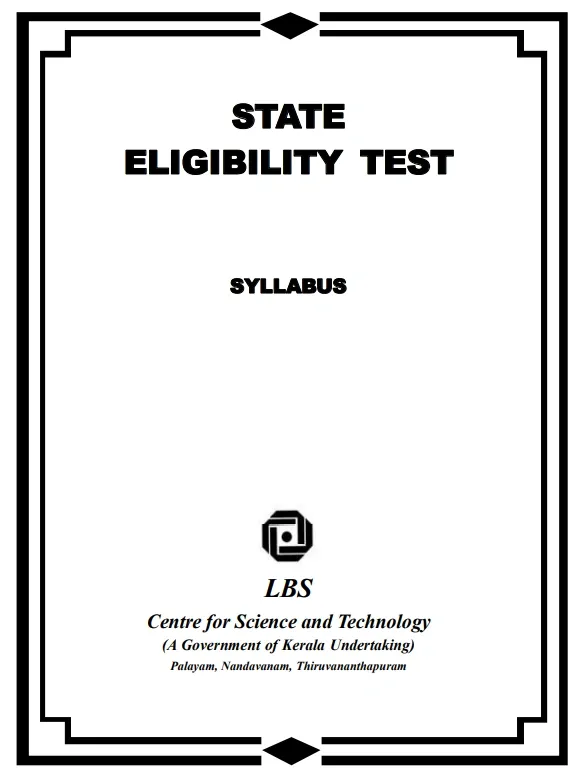
Downloading the official Kerala SET Zoology Syllabus 2026 PDF is the first step toward effective Kerala SET exam preparation. Released by the LBS Centre for Science and Technology, the syllabus outlines every unit and module prescribed for Paper 2 (Zoology), enabling candidates to prepare according to the latest exam pattern.
Click Here for the Kerala SET Zoology Syllabus 2026 PDF Download
Click Here for Kerala SET Paper 1 (General Paper) Syllabus PDF Download
Kerala SET Zoology Syllabus 2026 Unit-Wise
The Kerala SET Zoology Syllabus 2026 is divided into six major units, covering both fundamental and advanced concepts in Zoology at the postgraduate level. The syllabus includes Taxonomy, Animal Diversity, Evolution, Ecology, Physiology, Immunology, Developmental Biology, Genetics, Biotechnology, Cell Biology, Molecular Biology, Bioinformatics, and Applied Zoology. The complete official Kerala SET Zoology Syllabus 2026 is provided below.
Kerala SET Zoology Syllabus 2026: Unit 1 – Taxonomy, Animal Diversity and Applied Zoology
Module 1. Taxonomy
Classical taxonomy; Modern trends in taxonomy (numerical, cladistics, molecular taxonomy); phylogenetic tree. Scientific classification of organisms (five kingdom and three-domain systems); Biological nomenclature; ICZN. Homonymy and Synonymy ; Law of priority. Concepts of species and hierarchical taxa. Molecular Systematics (Mitochondrial DNA and Ancestral Polymorphisms, RFLP, RAPD, AFLP & VNTR, Alternate Molecular Approaches, Allozyme polymorphism, Microsatellite Loci.) DNA barcoding and tree of life.
Module 2. Animal Diversity
Prokaryotes and Eukaryotes. Levels of organization-cellular, tissue and organ. Symmetry,Coelom and Metamerism. Broad classification of animal kingdom: Mesozoa, Parazoa and Eumetazoa (Radiata, Bilateria); Protostomia (Acoelomata, Pseudocoelomata and Eucoelomata), Deuterostomia. Salient features of the phyla: Mesozoa, Porifera, Cnidaria, Ctenophora, Platyhelminthes, Nematoda, Nematomorpha, Rotifera, Annelida, Echiurida, Mollusca, Onychophora, Arthropoda, Echinodermata, Chaetognatha, Phoronida, Hemichordata, Chordata : Cephalochordates and Urochorates, Pisces, Amphibians, Reptiles, Birds and Mammals-origin, adaptive radiation and distribution.
Module 3. Applied Zoology
Insect pests: Pests of crops (coconut, paddy, rubber, sugar cane), Pests of stored food grains, Pest control - chemical, biological and Integrated Pest Management. Sericulture, Species of silkworms, Composition of silk, Silkworm rearing techniques. Apiculture, Species of honey bees, Beekeeping methods, Useful products from honey bees. Fisheries and aquaculture: Marine and Fresh water fishes, Fish breeding techniques, Finfish and Shell Fish culture, Different types of fish farming, Ornamental fishes and Aquarium keeping, Fishing crafts and gears.
Kerala SET Zoology Syllabus 2026: Unit 2 – Evolution, Ecology, Biodiversity and Ethology
Module 1. Evolution
Origin and evolution of life Evolutionary time scale Theories and modern concepts of organic evolution: Classical and synthetic theories of evolution. Mechanisms of evolution, Micro and Macro evolution, Co- evolution. Genetic drift; Bottle-neck effect; Punctuated equilibrium, Neutral theory, Molecular Clock. Species and speciation, Adaptive radiation and Animal distribution. Human Evolution-hominid fossils and cultural evolution.
Module 2. Ecology
Ecosystem: Characteristics of ecosystem, Concepts of Habitat and Niche. Structure and Stability of the ecosystem. Food chain and food web; Biological magnification and its effects. Energy flow, Productivity and Ecological pyramids. Biogeochemical cycles: gaseous cycles and sedimentary cycles. Ecological succession: Types, changes involved in succession, concept of climax. Population ecology: characteristics of populations and population growth curves. Community ecology: community structure and attributes; edge effects and ecotone. Animal interactions: Positive, negative and neutral interactions. Pollution: Water, Air, Soil, Noise, and Radioactive pollution- causes and consequences. Solid waste management. Major Environmental Issues: Green house effect, Acid rain, Ozone depletion, Global warming and Climate change; causes and consequences. Conventional and Non-Conventional Energy Resources. Environmental Impact Assessment; ecosystem monitoring and applications of remote sensing in environment management. Major international environmental conventions/ treatises and organisations
Module 3. Biodiversity
Concepts and levels of biodiversity. Measurement of biodiversity and biodiversity hotspots. Values and threats to biodiversity. Conservation strategies (in-situ and ex-situ conservation). Forest conservation, Wildlife management, Sustainable Development.
Module 4. Ethology
Motivation and Learning: Imprinting, habituation, imitation, classical conditioning, instrumental/operant conditioning, cognitive learning, latent learning, insight learning. Complex Behaviour: Orientation, Navigation and Homing, Migration (Fishes and Birds), Biological rhythms-biological clock, Circadian, Circannual, Lunar, Tidal and Seasonal periodicities. Pheromones and chemical communication.
Kerala SET Zoology Syllabus 2026: Unit 3 – Physiology, Immunology and Developmental Biology
Module 1. Physiology
Nutrition: Types of nutrition, Digestion: mechanical and chemical digestion, Digestive glands and enzymes. Neural and hormonal control of digestion, Absorption of sugars, amino acids and fats. Respiration: Respiratory pigments, Transport of O2 and CO2 , Bohr Effect, chloride shift. Neural and chemical respiratory disturbances. Body fluids and Circulation: Types of heart, heart beat, conducting system and pace makers. Common cardiovascular diseases. Composition of blood and Blood groups, Physiology of blood clotting, Control of cardiac activity. Lymph and lymphatic system Excretion: Patterns of nitrogen excretion, Structure of kidney, Ultrastructure of nephron, Mechanism of urine formation, Normal and Abnormal constituents of urine and renal disorders. Osmoregulation and regulation of kidney function. Muscle physiology: Types of muscles, Ultrastructure of skeletal muscle, Muscle contraction and properties of cardiac and smooth muscles. Simple muscle twitch, summation, tetanus, tonus and fatigue. Neurophysiology- Structure of neuron, Generation and transmission of nerve impulse, Synapses, Synaptic transmission and Neurotransmitters, Reflex action. Endocrine system: Endocrine glands and hormones, classification of hormones, Mode of action of hormones, Hormone disorders and Feedback control. Sense organs: Structure of eye, Physiology of vision, Visual elements and pigments; Eye defects. Structure of ear, mechanisms of hearing and balancing. Hearing impairments. Olfactory, gustatory and tactile senses. Reproductive Physiology: Male and female reproductive organs, Puberty, Adolescence, Menstrual cycle, Pregnancy, Parturition, Lactation and Birth control. Hormonal control of reproduction.
Module 2. Immunology
Organs and tissues of the immune system. Types of immunity: Innate, acquired, Humoral and cell-mediated immunity. Antigens and antibodies: Structure of antibodies, Antigen-antibody interactions. Complement system, General features, MHC, General organization and inheritance of MHC. Hypersensitivity, Immunodeficiency and Autoimmunity.
Module 3. Developmental Biology
Gametes and gametogenesis, Types of eggs, Fertilization and Fertilization events. Cleavage, Blastulation and Gastrulation: Types of cleavage, Cleavage patterns, Types of blastula, Fate map, Cell movements and Organogenesis. Basic concepts of development: Potency of embryonic cells, Competence, determination and differentiation, Genomic equivalence, Cytoplasmic control of nuclear activity, Primary embryonic induction, Nieukoop centre and mesodermal polarity. Different types of Placenta. Parthenogenesis: Natural and artificial parthenogenesis, Factors inducing parthenogenesis. Experimental embryology: Constriction experiments, Experiments on embryonic induction and competence, Cloning experiments in animals, Medically assisted reproductive techniques. Prenatal diagnosis and Teratogenesis. Basic biology of stem cells: Types and sources of stem cells with characteristics; Induced pleuri potent stem cells and stem cell therapy.
Kerala SET Zoology Syllabus 2026: Unit 4 – Biochemistry, Biophysics and Biostatistics
Module 1. Biochemistry
Water as a biological solvent: Biological importance, pH and Acid - base balance. Buffers and its biological significance. Classification and Structure of Carbohydrates. Metabolism of Carbohydrates: Glycolysis, Krebs cycle, electron transport chain, Pentose phosphate pathway, Gluconeogenesis, Glycogenolysis, Glycogenesis, biological significance. Classification, Structure and Biological Importance of Lipids. Metabolism of Lipids: Beta-oxidation of fatty acids, Biosynthesis of fatty acids. Biologically important Steroids, Prostaglandins. Proteins: Structure, classification and properties of amino acids, Proteins: Structure and Classification-Primary, Secondary and tertiary structure, Ramachandran plot. Metabolism of Amino acids and Proteins: Metabolism of Amino acids, Urea cycle, regulation of urea cycle, Deamination, Transamination and Decarboxylation. Vitamins: Classification, Function and Deficiency disorders. Enzymes: Classification and Nomenclature, Enzyme Kinetics, Regulation of enzyme activity, Enzyme inhibition, Zymogenes, Isozymes, Coenzymes and Ribozymes,
Module 2. Biophysics
Diffusion, Osmosis and Viscosity Bioenergetics: Laws of Thermodynamics (Entropy, Enthalpy, Concept of Free energy, ATP as a free energy carrier) Radiation Biology: Ionizing radiation, units and measurement, exposure and radiation dosimeter, autoradiography, Liquid Scintillation counter. Microscopy, Light, Phase Contrast, Fluorescent Microscopes, Transmission and Scanning electron microscopes. Chromatography: Principles and Application, Column, Ion exchange, TLC, HPLC, Gas and Affinity chromatography. Electrophoresis: Paper, SDS –PAGE and Agarose Gel electrophoresis. Colorimeter, Spectrophotometer, Flame photometer, Atomic absorption spectrophotometer, Infra-red spectrophotometry, NMR and EMR spectroscopy Centrifuge: Ordinary, high speed centrifuges, Density gradient centrifugation, Ultracentrifugation Radioimmunoassay: ELISA, Electrophysiological methods: ECG, EEG, MRI
Module 3: Biostatistics
Measures of central tendency: Arithmetic mean, median and mode Measures of dispersion : Mean and Standard deviation, Standard error Testing of hypotheses: Concepts of Normal, Binomial and Poisson distribution; Student’s –t test, One-way ANOVA, Concepts and applications of correlation and regression, Chi-square test.
Kerala SET Zoology Syllabus 2026: Unit 5 – Biochemistry, Biophysics and Biostatistics
Module 1. Genetics
Mendelian principles: critical evaluation. Interaction of genes: Allelic interactions: incomplete dominance, codominance, Nonallelic interactions: complementary gene action, epistasis, duplicate gene and polygenes. Multiple alleles: coat colour in rabbits, Rh blood group inheritance. Linkage and crossing over: Linkage groups, complete and partial linkage, Crossing over and recombination –Mechanisms of crossing over, kinds of crossing over. Mutation- Chromosomal aberrations and gene mutations, molecular basis, causes and significance. Extra chromosomal inheritance: Characteristics; maternal inheritance of cytoplasm, plastid genome, mitochondrial genome, Kappa particles in Paramecium, Maternal effects. Sex linked inheritance: characteristics, examples: haemophilia, colour blindness; holandric genes. Sex determination: Chromosomal basis and genic balance theory, Types of chromosomal mechanism, Dosage compensation, Barr bodies, Lyon hypothesis. Human genetics: Genetic disorders in man, Chromosomal anomalies (autosomal and sex chromosomal), Single gene disorders (autosomal and sex linked, inborn errors in metabolism). Human genome project.
Module 2. Biotechnology
History and concept of biotechnology, Vectors, Plasmids, Bacteriophage, Cosmids, Shuttle vectors, Yeast vectors, Minichromosomes, Artificial chromosomes, Probes and molecular markers, Properties and type of Isozymes, RFLP, RAPD, AFLP, VNTR, Minisatellites, Microsatellites Techniques in Genetic Engineering: Selection and isolation of desired genes, Gene splicing, Introduction of rDNA into host, Selection of clone containing DNA insert, DNA Finger printing, DNA sequencing, Chromosome jumping, Genomic library, cDNA library. Gene cloning: Cloning techniques in animals, cloning in bacteria and eukaryotes, Amplification of DNA by PCR, gene transfer technology, and expression of induced genes, Restriction enzymes, its applications and ligases. Applications of Biotechnology: Blotting techniques (Southern, Northern, Western), Genetic engineering and its applications. Diagnosis of diseases, Detection of genetic disorders, Gene therapy, Metabolites production, Bio controls agents, Biofuel, biogas Transgenic animals- Production and use; Ethics in biotechnology, Patenting, biological materials and IPR.
Module 3. Microbiology
Diversity and Ultra structure of Bacteria. Microbial Nutrition and Growth, Use of microbes in medical, biotechnological, industrial and agricultural fields. Antibiotics and antimicrobial drugs. Virology : classifications, structure and replication, Strategies, Viral pathogens, infections, symptoms, Anti-viral strategies, prevention and control of viral diseases.
Kerala SET Zoology Syllabus 2026: Unit 6 – Cell Biology, Molecular Biology and Bioinformatics
Module 1. Cell biology
Cell and cell theory, Structure and function of cell membrane, Organization based on fluid mosaic model. Membrane transport - diffusion, active transport, ion pumps, bulk transport. Differentiation of cell membrane: microvilli, tight junctions, belt and spot desmosomes, gap junctions. Cell organelles: Structure and function, Nucleus - nuclear envelope, nuclear pore complex, Mitochondria , Golgi apparatus, Ribosomes, Lysosomes, Endoplasmic reticulum, Peroxisomes and Centriole. Cytoskeleton: Microtubules, microfilaments and intermediate filaments; molecular motors. Cell Division- Mitosis, meiosis, Cell cycle and regulation of cell cycle, Cancer – Types and causes, Oncogenes and Tumour suppressor genes. Cell signalling, signalling molecules, second messengers, ligands and receptors. Chromosome-Structure, types, Euchromatin, heterochromatin, Nucelosome, condensation and coiling.
Module 2. Molecular biology
Nucleic acids: DNA - structure and Conformations of DNA DNA replication in prokaryotes and eukaryotes, replication machinery, mechanisms and repair. RNA - Types of RNA and functions. Genome organisation- Exons, introns, overlapping genes and transposons. Genetic code- characteristic features, deciphering genetic code, reading frame and frame shift. Protein synthesis: Central dogma, Transcription, Transcription factors, Transcription activators and repressors, RNA polymerases, capping, elongation and termination. Post-transcriptional processing in eukaryotes. Translation: Mechanism, initiation complex, elongation and termination, Post-translational modifications of proteins. Regulation of gene expression in bacteria. Operon model: lac operon, constitutive mutants, Catabolite repression. Regulation of gene expression in eukaryotes. Transcription factors, histones, acetylation and de acetylation. Regulation at transcriptional and translational level. Antisense RNA strategies- siRNA, miRNA.
Module 3. Bioinformatics
Nature and scope of Bioinformatics: Biological databases-DNA, RNA and Proteins- PDB, Swiss-PROT, GenBank, EMBL, NCBI and Entrez. Sequence alignment and use of BLAST, FASTA and CLUSTALW; Homology modeling, molecular phylogenetics and tree construction. Searching the database for sequence similarity. Introduction to genomics and proteomicsDNA and protein Microarrays. Computational tools for gene finding, protein structure prediction, RNA structure prediction; computational drug discovery.
Download the CC Learning App today and prepare strategically for Kerala SET Zoology Exam 2026!
Join Today!
Kerala SET Zoology Exam Pattern 2026
Understanding the Kerala SET Zoology Exam Pattern 2026 is equally important as knowing the syllabus. The Kerala State Eligibility Test consists of two objective-type papers conducted in offline (OMR-based) mode. Candidates must qualify both Kerala SET Paper 1 (General Paper) and Paper 2 (Zoology) by preparing according to the prescribed syllabus and practicing objective-type questions regularly.
Particular | Paper I (General Paper) | Paper II (Zoology) |
Question Type | Multiple Choice Questions (MCQs) | Multiple Choice Questions (MCQs) |
Number of Questions | 120 | 120 |
Maximum Marks | 120 | 120 |
Marks for Each Correct Answer | 1 Mark | 1 Mark |
Negative Marking | No | No |
Read More at:
- Kerala SET Hall Ticket 2026 Out: Download July Exam Admit Card at lbsedp.lbscentre.in
- Kerala SET History Syllabus 2026 PDF Download: Latest LBS SET Paper 2 Syllabus & Exam Pattern
- Kerala SET English Syllabus 2026 PDF Download: Unit-wise Syllabus, Exam Pattern & Preparation Guide
- Kerala SET Commerce Syllabus & Exam Pattern 2026
- Kerala SET Physics Syllabus 2026 PDF Download: Latest LBS SET Paper 2 Syllabus & Exam Pattern
- How to Qualify Kerala SET Exam in 30 Days (2026): Study Plan, Pass Marks & Preparation Tips
- Kerala SET July 2026 Notification Out | Eligibility & Application Process
- Kerala SET July 2026 Exam Date Announced! Admit Card & Latest Updates
- Kerala SET July 2026 – Notification, Exam Date, Eligibility & Preparation Guide
Prepare for Kerala SET Exam 2026 with CC Learning App
With the Kerala SET July 2026 examination scheduled for August 2, 2026, every remaining day is crucial for focused preparation. The CC Learning App, a multi learning platform, provides the best online SET coaching in Kerala to help candidates revise the complete syllabus efficiently, strengthen high-priority topics, practice expected MCQs, and qualify Kerala SET exam through expert guidance.
You will Get
- Complete Kerala SET Zoology syllabus-oriented revision
- High-weightage Zoology topics
- Previous year question discussion
- Practice MCQs and mock tests
- Quick revision sessions
- Expert faculty support
- Personal Mentorship
Download the CC Learning App today and prepare strategically for Kerala SET Zoology Exam 2026.
Frequently Asked Questions for Kerala SET 2026
Where can I download the Kerala SET Zoology Syllabus 2026 PDF?
You can download the official Kerala SET Zoology Syllabus 2026 PDF from the LBS Centre for Science and Technology or from the direct link provided here.
What are the main topics covered in the Kerala SET Zoology Syllabus 2026?
The Kerala SET Zoology syllabus covers six major units, including Taxonomy, Animal Diversity, Evolution, Ecology, Physiology, Immunology, Developmental Biology, Biochemistry, Genetics, Biotechnology, Cell Biology, Molecular Biology, Bioinformatics, and Applied Zoology.
How many units are included in the Kerala SET Zoology Syllabus 2026?
The Kerala SET Zoology Syllabus 2026 is divided into six comprehensive units, each covering multiple modules that assess postgraduate-level knowledge in Zoology.
Is the Kerala SET Zoology syllabus based on the postgraduate curriculum?
Yes. The Kerala SET Zoology syllabus is designed around the postgraduate (PG) curriculum prescribed by the LBS Centre for Science and Technology. Candidates are expected to have a thorough understanding of core Zoology concepts.
Does the Kerala SET Zoology exam have negative marking?
No. The Kerala SET Zoology 2026 examination does not have negative marking, allowing candidates to attempt all questions without losing marks for incorrect answers.
What are the most important topics for Kerala SET Zoology preparation 2026?
Candidates should focus on high-weightage areas such as Animal Diversity, Evolution, Ecology, Physiology, Genetics, Biotechnology, Cell Biology, Molecular Biology, Bioinformatics, and Immunology, while ensuring they cover the complete official syllabus.
Notifications
Trending Updates