
Scientific Officer Kerala PSC in Physics Exam Date 2024, Vacancies, Syllabus and How to Apply

Table of Contents
Kerala PSC Scientific Officer Physics Exam
Kerala PSC Scientific Officer Physics Exam Date
Kerala PSC Scientific Officer Physics Confirmation
Kerala PSC Scientific Officer Physics Admission Ticket
Kerala PSC Scientific Officer Physics Applicants
Kerala PSC Scientific Officer Physics Syllabus
Kerala PSC Scientific Officer Physics Previous Questions
Overview
Kerala PSC Scientific Officer Physics exam date has been officially published. It is high time the candidates started the final preparation. The state-wide exam will be competed among thousands of aspirants all over Kerala. Take up the best online PSC preparation to achieve your dream job in forensic department.

Kerala PSC Scientific Officer Physics Exam
The exam date for Kerala PSC Scientific Officer is released. Thousands of aspirants across Kerala is competing in this state-wide selection. In order to successfully enlist in the rank list candidates must clear the upcoming Kerala PSC Scientific Officer Physics exam with a mark higher than or equal to the cut-off marks.
|
PSC Scientific Officer Exam Details | |
|
Post |
Scientific Officer (Physics) |
|
Category |
636/2023 |
|
Department |
KPS (Forensic Science) |
|
Exam Date |
29-11-2024 |
|
Applicants |
9,786 |
|
Syllabus | |
|
Previous Questions | |
Kerala PSC Scientific Officer Physics Exam Date
Kerala PSC Scientific Officer exam date is 29 November, 2024. Candidates preparing for this exciting job must begin the final round of preparation. As the exam date is near, take up an engaging online crash course for the best result and top rank in the recruitment.
Kerala PSC Scientific Officer Physics Confirmation
As in most of the other PSC exam candidate must submit the confirmation for the upcoming Kerala PSC Scientific Officer exam. Candidates who do not submit the confirmation for Scientific Officer recruitment 2024 will be ousted from the further selection process. Find the window to submit the confirmation in candidate profile at the website Kerala PSC Thulasi. The window for submitting confirmation is open between 23 August and 11 September of 2024.
Kerala PSC Scientific Officer Physics Admission Ticket
All candidates who have applied and submitted the confirmation before the last date will receive their admission tickets in PSC Thulasi website. Candidates can download the Scientific Officer hall ticket from 16 September, 2024. Find your exam centre, date & time of exam and the details of the exam with the respective roll number. Find the admission ticket in the ‘Admission Ticket’ tab in the home page. Also, candidates must be mindful to keep the admission ticket until the scientific officer recruitment 2024 is over. Ensure
Kerala PSC Scientific Officer Physics Applicants
The total number of candidates applied for Kerala PSC Scientific Officer Physics exam is 9,786. Among this the candidates who have submitted confirmation will be filtered and admitted for the examination. The application, confirmation and exam results are only considered for the Scientific Officer recruitment 2024 under the category number 636/2023.
Kerala PSC Scientific Officer Physics Syllabus
Engage in an intense preparation after the thorough knowledge on Kerala PSC Scientific Officer Physics syllabus. Find the detailed syllabus below and download Kerala PSC Scientific Officer Physics syllabus pdf from the PSC’s official website.
- Classical Mechanics - 10 MARKS
Constraints and Generalized coordinates, D' Alemberts principle and Lagrange’s equation, Velocity dependent potentials, Hamilton’s Principle, Lagrange’s equation from Hamilton’s Principle, Kepler problem, Hamilton -Jacobi equation, Hamilton’s principal and characteristic function, H-J equation for the linear harmonic oscillator, Euler angles, Centrifugal and Coriolis forces, Nonlinear oscillations, Limitcycles, Chaos - Logistic map.
- Mathematical methods and group theory - 10 MARKS
Properties of Fourier series, Fourier - integral, Fourier transform, Gamma function, Beta function, Delta function, Bessel functions of the first and second kinds, Neumann function, Spherical Bessel function, Legendre polynomials, Generating function, Recurrence relation, Rodrigues formula, Orthogonality, Associated Legendre polynomials, Spherical harmonics, Hermite polynomials, Laguerre polynomials, Cauchy-Reimann conditions, Cauchy's integral theorem and integral formula, Laurent expansion, Singularities, Calculus of residues and applications.
- Electronics - 10 MARKS
Biasing of Field effect Transister (FET), FET as VVR and its applications, Photodetectors - Light dependent resistor- photodiode, p-n junction solar cells, Basic operational amplifier characteristics ,differential amplifier, OPAMP parameters, OPAMP as inverter, Analog integration and differentiation, Electronic analog computation, Active low pass filter, High pass Butterworth filters, Band pass filter, OPAMP based astable and monostable multivibrators, Schmidt trigger. Amplitude modulation and demodulation circuits, Comparison of signal to noise ratios, Pulse code modulation, Communications receivers, FM transmitters, VHF/UHF systems, Microwave systems, Satellite communications. \
- Quantum Mechanics - 10 MARKS
Vector spaces, The Hilbert space, Operators and its properties, Angular momentum operators, Matrix representation of angular momentum operators, Pauli spin matrices, Orbital angular momentum, differential and total cross- section, optical theorem, Harmonic perturbation, Interaction of an atom with the electromagnetic field, Induced emission and absorption, Anharmonic oscillator, stark and Zeeman effects in hydrogen, Hole theory, The Weyl equation. The Klein-Gordon equation, Charge and current densities.
- Statistical mechanics - 10 MARKS
The entropy of mixing and Gibbs paradox - Phase space of a classical system - Liouville‟s theorem and its consequences, Equipartition theorem - Virial theorem - The density matrix, Thermodynamic behaviour of an ideal Bose gas, Thermodynamic behaviour of an ideal Fermi gas- Magnetic behaviour of an ideal Fermi Gas : (1) Pauli paramagnetism, (2) Landau diamagnetism.
- Nuclear and particle Physics - 10 MARKS
Nuclear size, shape, mass and binding energy, semi empirical mass formula Characteristics of nuclear forces, s p i n -orbit potential, e l e c t r i c quadruple moments, parity violation in beta decay, internal conversion. Conservation laws and symmetries, Quark model, The eightfold way, quantum chromodynamics and gluons. , Fick‟s law and its validity, Shell structure and magic numbers, Single crystal and Powder diffraction, Scherrer equation, Debye-Scherrer Camera, Applications of XRD.
- Solid State Physics - 10 MARKS
Miller indices, Reciprocal lattice, Brillouin zones, Einstein and Debye models of specific heat, Nearly free electron model and formation of energy bands, Bloch functions, Kronig Penny model, Dielectric constant, Local Electric field, Ferroelectric domain, Antiferroelectricity, Piezoelectricity, Langevin‟s theory of diamagnetism, Weiss theory of ferromagnetism, Neel Model of Antiferromagnetic, Type I and Type II superconductors, energy gap Isotope effect, London equation, Cooper pairs, High Tc Superconductors, Cuprates.
- Atomic and molecular Spectroscopy - 10 MARKS
The spectrum of non-rigid rotator, Born –Oppenheimer approximation, Normal modes and vibration of H2O and CO2, Rotational Raman Spectrum of Symmetric top molecules, stimulated Raman effect and Inverse Raman Effect. Vibrational Analysis of band systems, Deslander‟s table, Interaction of nuclear spin and magnetic field, Larmour precession, Mossbauer Spectroscopy, Resonance fluorescence of γ-rays.
- Microprocessor - 10 MARKS
Organization of microcomputers, microprocessor as CPU, Addition, Subtraction of two 8 bit & 16 bit numbers, Organization and internal architecture of the Intel 8085,Timings of Intel 8085, Data transfer schemes of Intel 8085, Applications of Microprocessors, Analog to Digital converter, Clock for A/D conversion, Sample and Hold circuit, Analog multiplexer and Overview of 8051 microcontroller.
- Lasers and fibre Optics - 10 MARKS
Einstein coefficients, Line-broadening mechanisms, Q-Switching, Mode locking, Four level solid state lasers, CO2 lasers, Dye lasers, Semiconductor lasers, Spatial frequency filtering and holography, Second Harmonic Generation. Acceptance angle of Optical Fibre, Numerical aperture of optical fibre, Step-index fibers, Graded index fibers. Attenuation in optical fibers, Absorption losses, Leaky modes, Radiation induced losses, Inherent defect losses
Kerala PSC Scientific Officer Physics Previous Questions
- Consider the following statement regarding a projectile:
- The acceleration is not zero anywhere along its trajectory.
- Its velocity at the highest point is zero.
- The horizontal and vertical components of its motion are completely independent of each other.
Which among the above statements are true?
-
- Only (1)
- Only (1) & (3)
- Only (2) & (3)
- All
- Bessel functions of the second kind is also known as:
- Gamma function
- Beta function
- Generating function
- Neumann function
- Light travelling between two points in a medium takes a path for which
- distance is always minimum.
- time of flight is extremum.
- time of flight is always minimum.
- distance is extremum.
- Sky waves are refracted back to the Earth from
- the mesosphere
- the ionosphere
- the stratosphere
- they penetrate the atmosphere
- The Gibbs function per particle of a thermodynamic system is called as
- Helmholtz function
- Enthalpy
- Entropy
- Chemical potential
- Which among the following is NOT true about atomic nuclei?
- The atomic number Z equals the number of protons in the nucleus.
- The neutron number N equals the number of neutrons in the nucleus.
- The mass number A equals the number of nucleons in the nucleus.
- The isotopes of an element have the same A value but different N and Z values.
- Identify the indirect band gap material:
- Crystalline Silicon
- Indium Arsenide
- Amorphous Silicon
- Gallium Arsenide
- The activity of a radioactive sample is decreased to one-third of the initial value in 100 days. The half-life of the sample is approximately
- 50 days
- 63 days
- 30 days
- 100 days
- Which line broadening is due to the fact that atomic resonance frequencies are distributed over a band of frequencies?
- Homogeneous broadening
- Natural broadening
- Inhomogeneous broadening
- Pressure broadening
- Identify the following circuit:
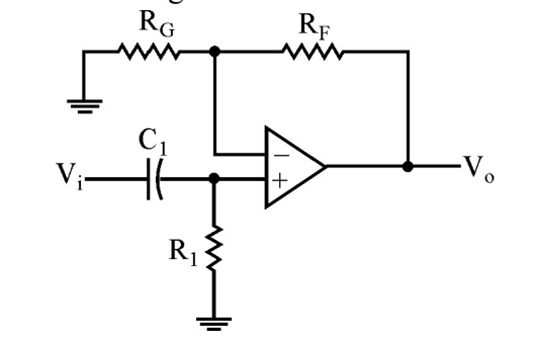
-
- Second order low pass filter
- First order high pass filter
- First order low pass filter
- Second order high pass filter
|
Answer Key | |
|
Q.No.. |
Ans. |
|
1 |
b |
|
2 |
d |
|
3 |
b |
|
4 |
b |
|
5 |
d |
|
6 |
d |
|
7 |
a |
|
8 |
b |
|
9 |
c |
|
10 |
b |
Trending Updates



Related Blogs

October 3, 2026
KTET September 2026 Application Date Extended to October 7: Apply Online Now
8 minute read
September 22, 2026
KTET Result 2026: CC Learning App Students Achieve Outstanding Success
7 minute read
September 21, 2026
KTET Result 2026 Out for In-Service Teachers - Download Scorecard
5 minute read
September 24, 2026
KTET September 2026 Notification Out: Exam Date, Eligibility, Apply Online & Syllabus
7 minute read
August 10, 2026