
SET Exam 2024: SET English Online Coaching, Syllabus, Study Material

Table of Contents
LBS Kerala SET Exam Importance
Kerala SET English
Kerala SET English Eligibility
SET Exam Syllabus: English
SET Previous Question Papers
SET English Online Coaching
Overview
LBS Kerala SET Exam is one of the most anticipated qualifying examination in the state. SET examination is being conducted by LBS institute of Science and Technology. Out of the 35 optional subjects English has one of the highest number of candidates. Get prepared for SET English with the best online coaching platform which has produced the top Kerala SET result in 2024.

LBS Kerala SET Exam Importance
LBS Kerala SET exam is an important certifying test conducted by LBS Centre for Science and Technology. A pass certificate in Kerala SET exam is a crucial eligibility for Kerala HSST and NVHSE Teaching candidates, aspiring for a teaching job in government sector. Therefore, all candidates aspiring for apex teaching position in school education must clear LBS SET exam.
Kerala SET English
SET English is one of the highly competed subjects in Kerala SET exam. Candidates applied for the exam should undertake a serious and intense coaching in order to clear the test in the upcoming LBS SET exam 2024.

Kerala SET English Eligibility
Candidates who are applying for SET English should have earned a Master's degree in English Literature with at least 50% marks or an equivalent grade. The candidates must have acquired a B.Ed. degree in English from any universities in Kerala, or from any other university recognized as equivalent thereto, are eligible to apply.
Also, candidates who have earned a Master’s Degree in Communicative English with a minimum of 50% of marks or equivalent grade and B.Ed, are also eligible to appear for LBS SET English exam.
SET Exam Syllabus: English
The syllabus of LBS SET English exam extends from the age of Chaucer to the Contemporary trends in English literature. Find the Unit-wise details of the English SET examination syllabus.
Unit I
- Module 01: Chaucer’s Age
- Module 02: Early Renaissance in England
- Module 03: Late Renaissance England
- Module 04: Beginning of English Prose
- Module 05: Rise of English drama
- Module 06: Revenge Tragedy
- Module 07: Elizabethan Theatre
- Module 08: Shakespeare
- Module 09: Language – Folio – Quarto – Shakespearean Sonnets
- Module 10: Metaphysical Poetry
- Module 11: Reformation
- Module 12: Milton
- Module 13: The Restoration
- Module 14: Neoclassical age
- Module 15: Heroic Drama
- Module 16: Popular Prose Writing
- Module 17: Dryden and Pope
- Module 18: Dr: Johnson
- Module 19: Rise of the novel
- Module 20: Transition Poetry
Unit II
- Module 01: Beginning of Romanticism
- Module 02: Preface to the Lyrical Ballads Module
- Module 03: Early Romantics
- Module 04: Later Romantics
- Module 05: Gothic Novel
- Module 06: Historical Novel
- Module 07: Prose
- Module 08: Early Feminist Writing
- Module 09: Beginnings of the Victorian Age
- Module 10: Victorian Poetry
- Module 11: Pre-Raphaelites
- Module 12: Aestheticism
- Module 13: Victorian Prose
- Module 14: Victorian Biography
- Module 15: Victorian Novel
- Module 16: Hardy
- Module 17: Victorian Women Novelists
- Module 18: Victorian Drama
- Module 19: Transition
- Module 20: Victorian Age and the Colonial Enterprise
Unit III
20th Century and Contemporary British Literature
- Module 01: Edwardian period
- Module 02: War Poets
- Module 03: Pink Poets
- Module 04: Avant
- Module 05: Modernist Poetry
- Module 06: Verse drama
- Module 07: World War II and its aftermath
- Module 08: Ted Hughes
- Module 09: Prose- G:K: Chesterton
- Module 10: 20th Century Novel
- Module 11: Early modernism
- Module 12: Stream of consciousness
- Module 13: Dystopian literature
- Module 14: Post war fiction
- Module 15: Drama
- Module 16: Irish dramatic movement
- Module 17: Post-war drama
- Module 18: Theatre of the Absurd
- Module 19: Recent trends in British Writing
- Module 20: Immigrant Writing
Unit IV
American, Indian and New Literatures in English
- Module 1: Pilgrim Fathers
- Module 2: 19th and 20th century American
- Module 3: Robert Frost
- Module 4: 19th century American Novel
- Module 5: 20th century American Novel
- Module 6: Harlem Renaissance
- Module 6 American Drama
- Module 7: The beginnings of Indian Poetry in English
- Module 8: Indian English Poetry today
- Module 9: Indian English Novel Early Phase
- Module 10: Indian English Novel Today
- Module 11: Indian English Drama
- Module 12: African Literature and Colonialism
- Module 13: African Literature and Post Colonialism
- Module 14: Caribbean Intellectual Tradition
- Module 15: Caribbean Literary Tradition
- Module 16: Canadian literature
- Module 17: Canadian Literature
- Module 18: Australian literary history
- Module 19: Patrick White
- Module 20: South Asian Literature
Unit V
History and Structure of English and English Language Teaching
- Module 1: The Sound system of English
- Module 2: English phonology
- Module3: English morphology
- Module 4: Semantics
- Module 5: The Indo-European family of languages
- Module 6: Old English
- Module 7: Middle English
- Module 8: English at the Renaissance
- Module 9: English overseas
- Module 10: English in the postcolonial world
- Module 11: Approaches to language learning
- Module 12: Theory of language
- Module 13: History of English Teaching in India
- Module 14: English as a Second language (ESL)
- Module 15: Methods of language teaching
- Module 16: Learner factors
- Module 17: Classroom procedures
- Module 18: Teaching materials/aids
- Module 19: Tests and evaluation
- Module 20: Keywords
Unit VI
Literary Theory and Criticism
- Module 1: Aristotle
- Module 2: Romanticism
- Module 3: Matthew Arnold
- Module 4: William Empson
- Module 5: Liberal Humanism
- Module 6: Marxist Criticism
- Module 7: Saussure
- Module 8: Psychoanalysis
- Module 9: Modernism
- Module 10: Post structuralism
- Module 11: Feminism
- Module 12: Gender and Sexuality
- Module 13: Postcolonialism
- Module 14: Cultural Materialism and New Historicism
- Module 15: Dalit Aesthetics
- Module 16: Theories of Translation
- Module 17: Cultural Studies
- Module 18: Green Studies
- Module 19: Indian Aesthetics
- Module 20: Alamkara
SET Previous Question Papers
Preparation of SET exam is intense and as you can read from the above-mentioned syllabus the subject to be covered is vast. And one of the best way to check the preparedness and to effectively cover the syllabus is to work out the previous question papers. The two-fold advantages of this method include, getting adept with the question patterns and candidates themselves can check the effective time management.
Get unlimited access to previous question papers and enhance your preparation to stay ahead in the competition by joining Competitive Cracker.
Take a look at the sample questions
Kerala SET Exam English sample questions
- Stevens the elderly butler is a character in:
- Northanger Abbey
- Brideshead Revisited
- The Remains of the Day
- A Handful of Dust
- ‘The Academy of Lagado’ is described in the work:
- Gulliver’s Travels
- The Grammarian’s Funeral
- The Man Who Was Thursday
- The Man Who Would Be King
- In hypotheses regarding the development of Creole vernaculars, the term ‘substrate’ refers to:
- The local non-European languages
- The European colonial languages
- An intermediary language
- A newly created language
- Thus, though we cannot make our sun Stand still, yet we will make him run.’ These are the closing lines of:
- The Long Voyage
- Breathes There The Man
- To His Coy Mistress
- Flying Crooked
- Who declared that “Technology is the new God, and the astronauts are the high priests of the new religion”?
- Marshall McLuhan
- Hannah Arendt
- Eric Fromm
- Goerge Steiner
- The Temple is a collection of poems by:
- Thomas Crew
- Robert Herrick
- George Herbert
- Richard Crashaw
- The fall of the prison of Bastille that marks the beginning of the French revolution occurred in----.
- July 14,1789
- August 14,1789
- September 5,1779
- July 10,1788.
- The journal started by the Pre-Raphaelites to promote their ideals:
- The Germ
- The Rambler
- The Tatler
- The London Chronicle
- A Doppelgänger story written by Edgar Allen Poe:
- “The Gold-Bug”
- “William Wilson”
- “The Oval Portrait”
- “The Purloined Letter”
- The line – “My father, sceptic, rationalist, trying every curse and blessing, powder, mixture, herb, and hybrid” occurs in the poem ----
- Jewish Wedding in Bombay
- Poet, Lover, Bird Watcher
- Night of the Scorpion
- Enterprise
- The Zone of Proximal Development Theory is associated with:
- Bruner
- Vygotsky
- Piaget
- Skinner
- The second wave feminism started in the United States with the publication of:
- A Room of One’s Own
- The Laugh of Medusa
- The Feminine Mystique
- Sexual Politics
Answer Key | |
| Q.No. | Ans. |
| 01 | c |
| 02 | a |
| 03 | a |
| 04 | c |
| 05 | c |
| 06 | c |
| 07 | a |
| 08 | a |
| 09 | b |
| 10 | c |
| 11 | b |
| 12 | c |
SET English Online Coaching
To clear SET English exam applicants need a perfect strategy to cover the entire syllabus effectively. To prepare by themselves might be tiring and struggling for some, especially those who have a job. The perfect solution for such candidates is an online coaching platform. In an online coaching candidate need not to physically travel to a classroom. Any candidate can access the course according to their convenience. The online platforms provide both live and recorded classes. Even though the candidates are not able to attend the live class, the class will be recorded and available any time during the course period. This helps the candidate to prepare at their own pace.
Candidates who rely more on the study materials get the best study materials for preparation. The study materials are regularly updated according to the latest syllabus and exam pattern. With the dedicated SET English course, SET ASTRA 2.0 ENGLISH 90 DAYS CRASH BATCH 2024-25, get the best preparation strategies and effective completion of the syllabus. Embed the learned units to your memory with the special revision classes. Practice maximum with the mock tests and weekly model exams. These features enable the candidates to prepare effectively. Join now and achieve the qualifying certificate to get the teaching job you dream.
Trending Updates


Related Blogs
September 29, 2026
Kerala SET Syllabus & Exam Pattern 2026: Paper 1 & Paper 2
6 minute read
September 29, 2026
Kerala SET Result 2026: LBS SET July Result Date, Direct Link & How to Check
9 minute read
September 21, 2026
Kerala SET Answer Key 2026 - Subject Wise PDF Download
12 minute read
August 24, 2026
Kerala SET July 2026 Revised Hall Ticket: New Admit Card Download from September 1
6 minute read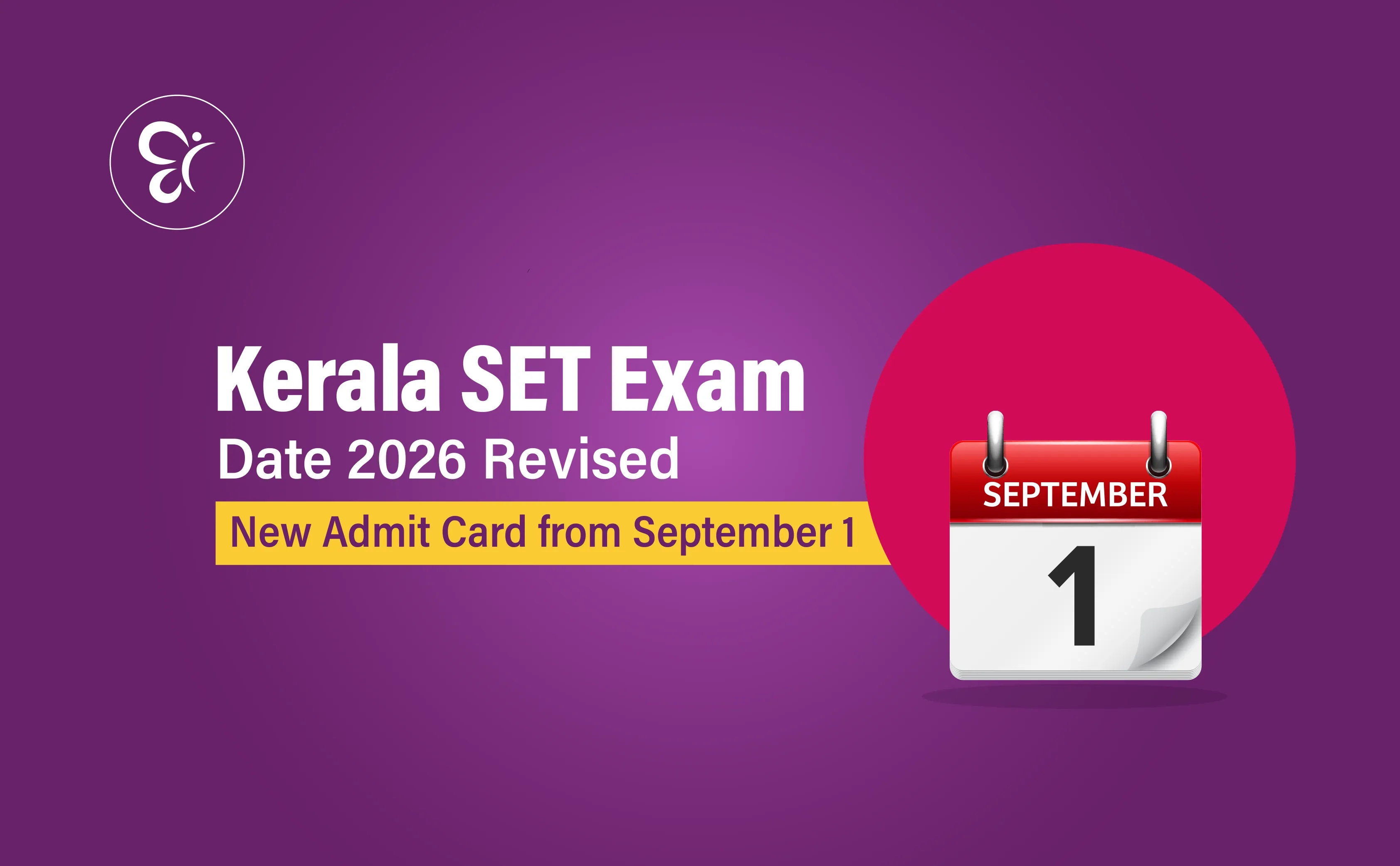
August 8, 2026