
KTET Sewing Exam 2025: Syllabus, Online Coaching, Previous Question and Prep Method
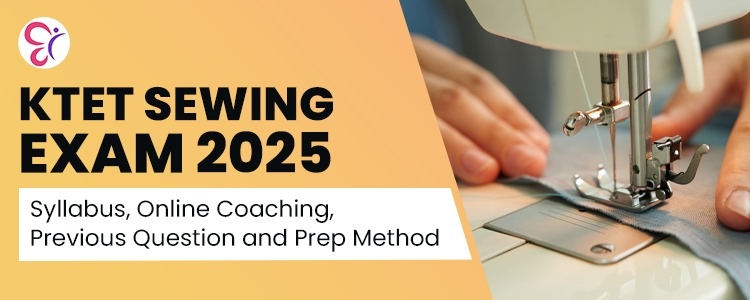
Table of Contents
KTET 4 Sewing Exam
KTET 4 Sewing 2025 Syllabus
KTET 4 Sewing Preparation
KTET 4 Sewing Previous Questions
FAQ
Overview
The KTET exam notification for December 2024 exam will be published soon. All eligible candidates shall apply for this KTET Category 4 examination. The qualifying exam is crucial for the candidates who are aiming to apply PSC Sewing Teachers’ recruitment. Those who are aspiring to clear the exam require a perfect learning strategy to complete learning the entire syllabus. Let’s go through KTET 4 Sewing exam pattern, syllabus and previous questions.

KTET 4 Sewing Exam
KTET category 4 sewing exam is an important qualifying examination for eligible candidates. Only candidates who satisfies the official qualification, as mentioned in the chapter XXXI of Kerala Education Act and Rules, shall apply for the upcoming KTET 4 Sewing exam.
Qualification
The candidates who are applying for KTET 4 Sewing exam must possess the educational qualifications as mentioned below:
- A pass in S. S. L. C. Examination conducted by the Commissioner for Government Examinations, Kerala or its equivalent; and
- Group certificate in Needle Work and Dress making of the K. G. T.E. (Higher)
or
M. G. T. E. (Higher); or Group Certificate in Tailoring of the K.G.T. E. (Higher)
or
M.G.T.E. (Higher)
or
Group Diploma in crafts issued by the Commissioner for Government Examinations, Kerala
or
National Trade Certificate in Cutting and Tailoring or in Dress Making issued by the National Council for training in Vocational Trades, Government of India
or
Diploma in Craftsmanship (Tailoring and Garment making) issued by the Director of Technical Education, Kerala.
Benefits
Qualifying KTET 4 Sewing will make candidates eligible to apply the Kerala PSC UP and HAS recruitments for the sewing teacher. The certification is an added qualification for Sewing teachers in private schools also. The certificate of KTET category 4 Sewing will help to get an upgraded salary package.
Pattern
Pareeksha Bhavan conducts the KTET exam based on well defined pattern. The KTET Sewing is included in the category 4 of the exam program. The exam includes 3 parts and each pat has its own weightage of marks. See the mark distribution of KTET Category 4 Sewing below.
Part No. | Subject | No. of Questions | Marks |
1 | Child Development, Pedagogy & Teacher Aptitude | 30 | 30 |
2 | Language Malayalam / English / Tamil / Kannada | 40 | 40 |
3 | Sewing (Content & Pedagogy) | 80 | 80 |
Total Mark | 150 | 150 | |
KTET 4 Sewing 2025 Syllabus
Sewing Machine
- Different types of sewing machine - Hand, treadle, electrical, over lock
- Parts of sewing machine and functions
- Care and maintenance
- Common problems and remedies while sewing
- Special attachments
Tailoring Tools and Equipment
- Measuring, Drafting, Cutting, Stitching, Pressing
Body Measurement
- Measurement of human body and its importance
- Dress form
- Eight head and ten head theory
- Measurement chart & relation of measurement
Pattern Making
- Precautions in making patterns, Lay out, grading, spec sheet
- Precautions in cutting cloth - texture based and design based
- Hand Stitches used for Tailoring
- Tacking, running, hemming, back, button hole, herring bone, over casting…..
Fullness in garments
- Seams, darts, tucks, pleats, ruffles, gathers, smocking
- Hemmed opening, continuous opening, simple placket, mitred opening, fly opening, bound opening, shirt opening
- Buttonholes, buttons, hooks, eyes, zip, tape loops, rouleau loops
- Facing, Binding, Piping
Raw Materials
- Introduction to textiles
- Classification of fibres - Natural and manmade
- Yarn manufacturing process, yarn particulars
- Different types of sewing threads, properties of sewing thread
Fabric Forming
- Features of looms - types of looms - weaving process
Fabric Particulars
- Warp, weft, EPI, PPI selvedge, cloth width, weaving designs
Finishing Process
- Singeing, scouring, bleaching, mercerizing, sanforising, dyeing, printing, calendaring, shrinking, weighing, napping, glazing, embossing, moireing
- Roller printing, screen, block, stencil, spray, direct, discharge, resist
- Common dyes, methods and styles of dyeing
Study of cloth
- History of clothing
- Cotton, silk, linen, woollen, shiffon, net, rayon, polyester, nylon, velvet, canvas
- Selection of Fabrics according to climate, age, occupation, religion, cultural, political, festival
- Clothing care - Stains removal, laundry
- Different Types of mending, darning, patching
Technical Terms
- Cross back, fly, lapels etc
Knitting
- Basic stitches, patterns, knowledge of tools
Crochet
- Basic stitches, knowledge of tools
Embroidery
- Hand embroidery tools
- Stitches and usage - Out line stitches, chain stitches, border stitches, marking stitches, decorative
- stitches and ornamentation stitches
- Design Transferring - Pouncing method, carbon, direct
- Design Enlarging and Reducing - Square method, diagonal method
- Cut work, applique work, shadow work, drawn thread work, mirror work, beads work, sequence work
Fabric Painting
- Primary colours, secondary colours, tertiary colours, warm and cool colours, colour wheel
PEDAGOGY
- Scope, role and nature of art and craft education in school curriculum – the rationale for including craft subject – supplementing learning process – overall personality development
- Method of imparting the skill – constructive method – practical work – concept formation – imagination – instructional aids – use of audio-visual equipment – practical records and albums – field visit – lesson planning – unit planning
- Directing learner interest – approach
- Trends and development in garment manufacturing – Socio economic considerations of fashion – fashion designers – India and abroad
- Publications in the craft – books and journals – national level institutes in garment manufacturing education – NIFT – institutes involved in framing quality norms in the craft – ATIRA, NITRA
- Evaluation – Constructing practical tests, assessing the skills.
KTET 4 Sewing Preparation
Candidate should follow the best preparation strategy to clear the KTET 4 Sewing examination in the next attempt. Go through the detailed syllabus of all the three parts of the examination and strategize your learning schedule accordingly. Allot more time for confusing and tough topics. Find time for more revisions. Attempt mock, tests and model exams. Online coaching platforms such as Competitive Cracker provide you with a dedicated mentor who will be ready at hand to take you through the Online coaching for KTET Category 4 Sewing exam 2024. Clear your doubts and confusions in real time through the interactive live classes in Competitive Cracker mobile application. With online coaching, candidates benefit with an escape from the hurry burry of travel and attending the offline classes. Also, Competitive Cracker has the best faculties who are leading the Kerala TET exam coaching arena. The victory CC students had reaped in the previous KTET exams are the greatest evidence of the best online KTET coaching platform.
KTET 4 Sewing Previous Questions
- Which fibre is the product of seeds?
- Silk
- Vikara
- Linen
- Wool
- Which is the most basic one in seams?
- Mock French seams
- Flanal seam
- Flat Fell seam
- Dress seam
- Mineral Product:
- Nylon
- Jarika
- Terlin
- Tericotton
- Which method is used only for most important measurements?
- Direct Measurement
- Compound Measurement
- Shoulder Measurement
- Basic Measurement
- What makes cloth to move forward while stitching in machine?
- Feed dog
- Tension spring
- Stitch Regulator
- Slack Thread Regulator
- Name the pattern of designing equally on the both sides of cloth:
- Roller Printing
- Duplex Printing
- Block Printing
- Stencil Printing
- What does “Arm round” denote:
- the circumference below the knee
- the circumference around the neck
- the circumference at the end of the sleeve
- the circumference around the calf
- Selvedge on fabrics denotes:
- Weft
- Warp
- Crossway
- Bisway
- Which among the following is an example for trimmings?
- Tasils
- Weaving
- Scalloping
- Shell edge
- The mixture of 60% Terlin, 10% Cotton and 30% Viscos make:
- Terrywool
- Terilex
- Terrin
- Tericotton
Answer Key | |
Q. No. | Ans. |
1 | b |
2 | d |
3 | b |
4 | d |
5 | a |
6 | b |
7 | c |
8 | b |
9 | a |
10 | b |
FAQ
- What is the cut-off mark of KTET 4 exam?
Candidates from general and OBC community need to score 60% (90 out of 150) marks. Candidates from SC/ST communities need 55% (82 out of 150) marks.
- How many times a candidate can attempt KTET exam?
There are no restrictions in the number of attempts for the candidates
- When do the KTET Exam takes place every year?
The KTET Exam usually takes place twice every year. The month of exam varies according to the announcement from the exam conducting body, Pareeksha Bhavan.
Trending Updates



Related Blogs

October 3, 2026
KTET September 2026 Application Date Extended to October 7: Apply Online Now
8 minute read
September 22, 2026
KTET Result 2026: CC Learning App Students Achieve Outstanding Success
7 minute read
September 21, 2026
KTET Result 2026 Out for In-Service Teachers - Download Scorecard
5 minute read
September 24, 2026
KTET September 2026 Notification Out: Exam Date, Eligibility, Apply Online & Syllabus
7 minute read
August 10, 2026